• A
  • A
  • A

World War One and the Manchester Sephardim

by Basil Jeuda

How World War One impacted on Manchester’s 1,000-strong Sephardi community was the subject of my book which was published in June of this year by the Shaare Hayim Synagogue. It focussed on two groups of Sephardim, firstly, those who fought in the Armed Forces and, secondly, those who were classified as aliens by reason of their non-British nationality. Since then, further information on Manchester Sephardim in World War One has come to light and now forms the basis of this article.

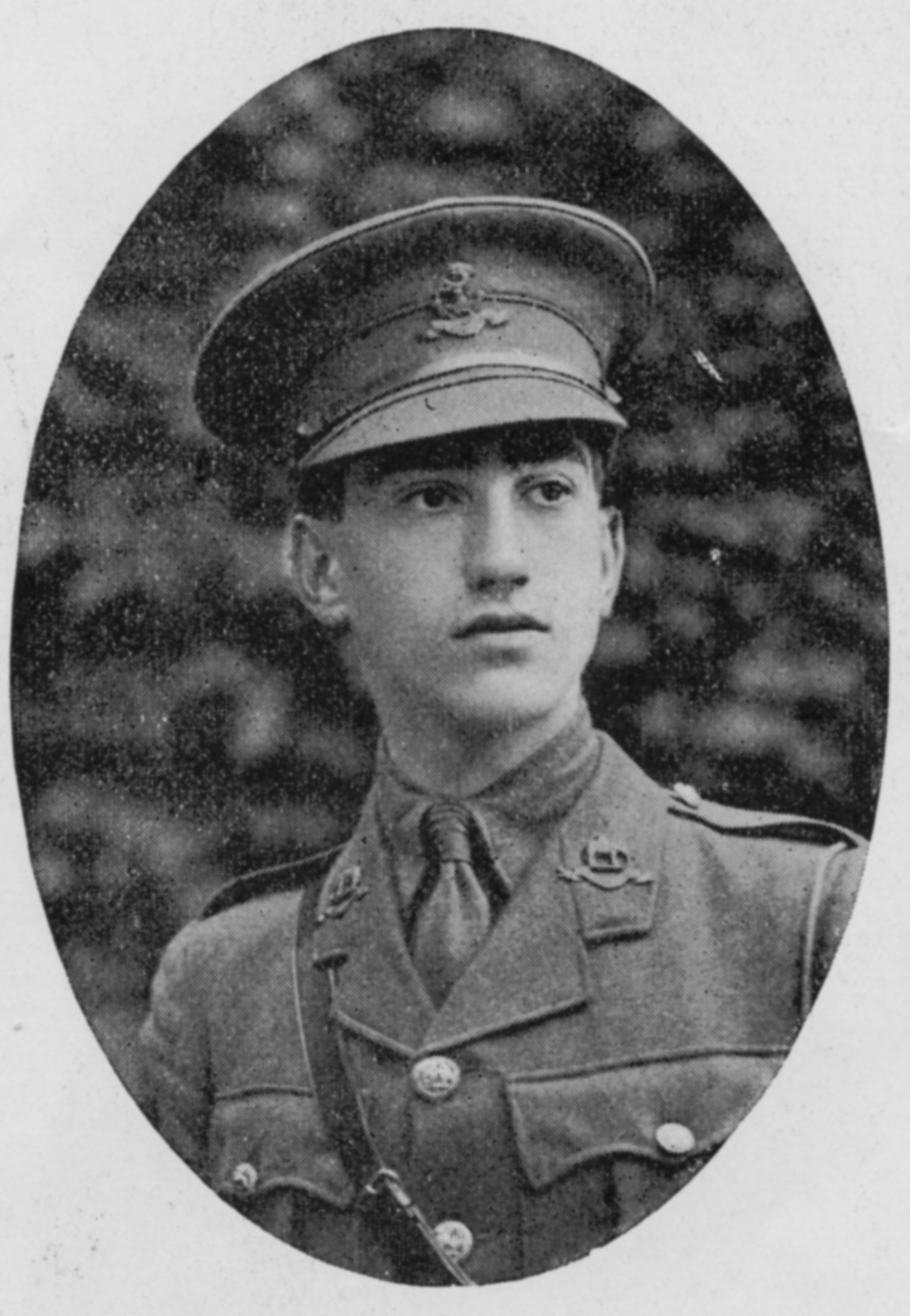
One of those killed in the War was Lieutenant Leon David Goldseller of Belfield Road, Didsbury. He was the son of Benjamin and Bertha Goldseller and he was born in 1896; the Goldsellers were amongst a handful of Ashkenazi members of the Withington Sephardi Synagogue, though Leon’s grandmother was from a Sephardi (Laredo) family from Gibraltar. At the book launch, the great-niece of one of those who was killed in the War read out an extract from the book covering his short life. She brought with her additional information in the form of a citation which led to the award of the Military Medal to one of the Privates who rescued the dying Leon Goldseller from behind the German lines during the two phases of the Battle of Bullecourt, a small village east of Arras; this is where nearly 18,000 British and Australian troops were killed or wounded in the space of five weeks in April and May 1917. This is an extract from the citation:

"Lieutenant Goldseller was leading a patrol of four men reconnoitring part of the village of Bullincourt on the night of 14th/15th April 1917. The party had got through the enemy’s wire when they were discovered and fired on….Lieutenant Goldseller was shot through the stomach…and he was carried into a German trench inside the wire. Private Carter was sent to get a stretcher; Very lights were going up on each side of them for about an hour. They then carried Lieutenant Goldseller through the wire and back towards our lines, meeting the stretcher party about 300 yards from the German lines. During the whole time they were returning, they were under heavy sniping and bursts of machine gun fire. Lieutenant Goldseller died shortly after arrival at the Dressing Station."

The Senior British Chaplain for the Army and the Navy, the Reverend Michael Adler, officiated at the burial of Leon Goldseller where a wooden Star of David was placed over his grave. I discovered, during my later research, that, by a strange coincidence, the Reverend Adler was a cousin of my own grandmother and that he had officiated at her wedding in Leeds in February 1908.

Joshua Cansino was another of the Manchester Sephardim who was killed in the War. The Cansino family had been trading in textiles in Manchester since 1870. He was born in Casablanca in 1890, enlisted originally in the Royal Sussex Regiment, and was subsequently commissioned in November 1915 as a Second Lieutenant in the 22nd Battalion, the Public Schools Battalion, of the Manchester Regiment. On a raid into the German lines a month before the start of the Battle of the Somme, Joshua was killed in action, and his Commanding Officer recalled to Joshua’s parents, "he died attempting to rescue a wounded officer entangled in the enemy’s wire, in the face of almost certain death.". His body was not recovered for burial and his death is recorded on the massive Thiepval Memorial in Belgium that contains the names of 72,195 Allied soldiers with no known grave. My wife and I recently visited this Memorial and photographed his name engraved in Portland stone. There are members of the Cansino family still living in Manchester.

In establishing the names and numbers of the Manchester Sephardim who fought in the War, I had access to the Illuminated Roll of Honour prepared in 1917 by the Conjoint Board of the Elders of the two Spanish & Portuguese Congregations of Manchester; this contained 61 names, but a few years later the Official History of the Cheetham Hill Road congregation contained a list of 67 names; I was able to establish the Regiments of most of them and the service records of some. However, what I overlooked were the Sephardi origins of members of the Manchester Congregation of British Jews who had served in the War. This congregation’s Roll of Honour, at its Whitefield cemetery, is of those who served in the War and it contains forty-three names; of these, eleven were of Sephardi origin. Three were members of the large Henriques family, three were members of the Valentine family, three of the (Lopes) Salzedo family, and there was one Besso, and one Torres.

The Henriques family was a prominent member of the Jewish establishment in London in the early part of the 19th Century. The family’s prosperity had been derived from its trading activities in Jamaica. Members of the Henriques family were founders of the West London (Reform) Synagogue in 1843, and, following his arrival in Manchester c1859, David Henriques and some of his descendants became heavily involved in the Manchester Congregation (Reform) of British Jews at Park Place, Cheetham Hill Road. The family had little formal connection with the Manchester Sephardi community.

Firstly, there was Major Edward Cecil Quixano Henriques. His military career was considerable. He had been commissioned as a Second Lieutenant in May 1901 in the 3rd Battalion of the Lancashire Regiment. He was promoted in 1905 to the rank of Captain in the Royal Engineers, and in November 1914 to the rank of Major, Royal Engineers (Divisional), being attached to the 1st East Lancashire Field Company. He was a member of the Institute of Civil Engineers. He was the Commander-in-Chief of the Manchester Jewish Lads Brigade. Prominent in public life, he was a JP, and at one stage President of the Council of Manchester & Salford Jews. The 1911 census shows him living on Bury New Road, Salford.

Secondly, there was Lieutenant George Lionel Quixano Henriques who appears in the 1911 census as a pupil at Harrow School. His father, David, was a stock-broker with his business in Pall Mall, Manchester. The 1911 census shows the family living in Prestwich; by 1921, George had married and was living in Buxton. He was commissioned at the start of the War as a Lieutenant in the 16th Battalion of the Manchester Regiment, initially seeing service in France before he was later attached in Preston to the Manchester Regiment.

Finally, there was Second Lieutenant Lionel Quixano Henriques. He was commissioned in 1918 as a 2nd Lieutenant in the Loyal North Lancashire Regiment. In the 1911 census he was living with his parents in Holden Street, Kersal. The entry for his father, Frank Henriques, in the 1911 Manchester Royal Exchange Directory is Manufacturers and Velvet Makers – Mercerised Fancies.

There were three members of the Valentine family that appear on the Reform Roll of Honour. The Valentine family were long-established members of the London Sephardi community. Private A Henriques Valentine served in the 1st Battalion of the Manchester Regiment, Private Moss Henriques Valentine served in the Royal Fusiliers (London), and Private Sampson Henriques Valentine, who lived in Longsight, probably served in the West Yorkshire Regiment. They were all related to the Reverend Judah Henriques Valentine, the second Minister of the Cheetham Hill Road Sephardi congregation, who served it for 39 years from 1878 to 1917. His brother was another Moss Henriques Valentine who was appointed Reader at Park Place in 1896 and had retired by 1918.

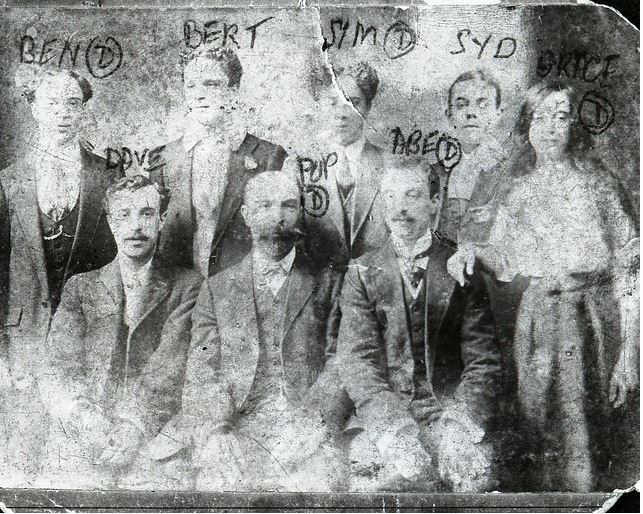
In Manchester, the head of the Salzedo family was Morites Lopes Salzedo who was born in Holland in 1856 and came to London as a young man. The Lopes Salzedo family had lived in Holland for several hundred years, and before that in Portugal. By the time of the 1881 Census he had arrived, recently-married at Bevis Marks Synagogue, in Manchester as a tailor. In 1896, he was appointed shamash at the Manchester Reform Synagogue, a post he appears to have held until his death in 1924. He had a large family, six sons and one daughter, and a lot of information about this family can be accessed easily from the web pages of Lopes Salzedo, where several descendants have provided significant amounts of family history.

Three sons served in the British forces. By the time World War 1 broke out, several members of the family were using the name “Selwyn” as their surname although their official Army records contain the name “Salzedo”. Firstly, Benjamin Lopes Salzedo, born in 1888, was a piano teacher living in Higher Broughton, who was conscripted into the South Lancashire Regiment in November 1916 and subsequently promoted to Lance Corporal in June 1917 when he was stationed in Norfolk.

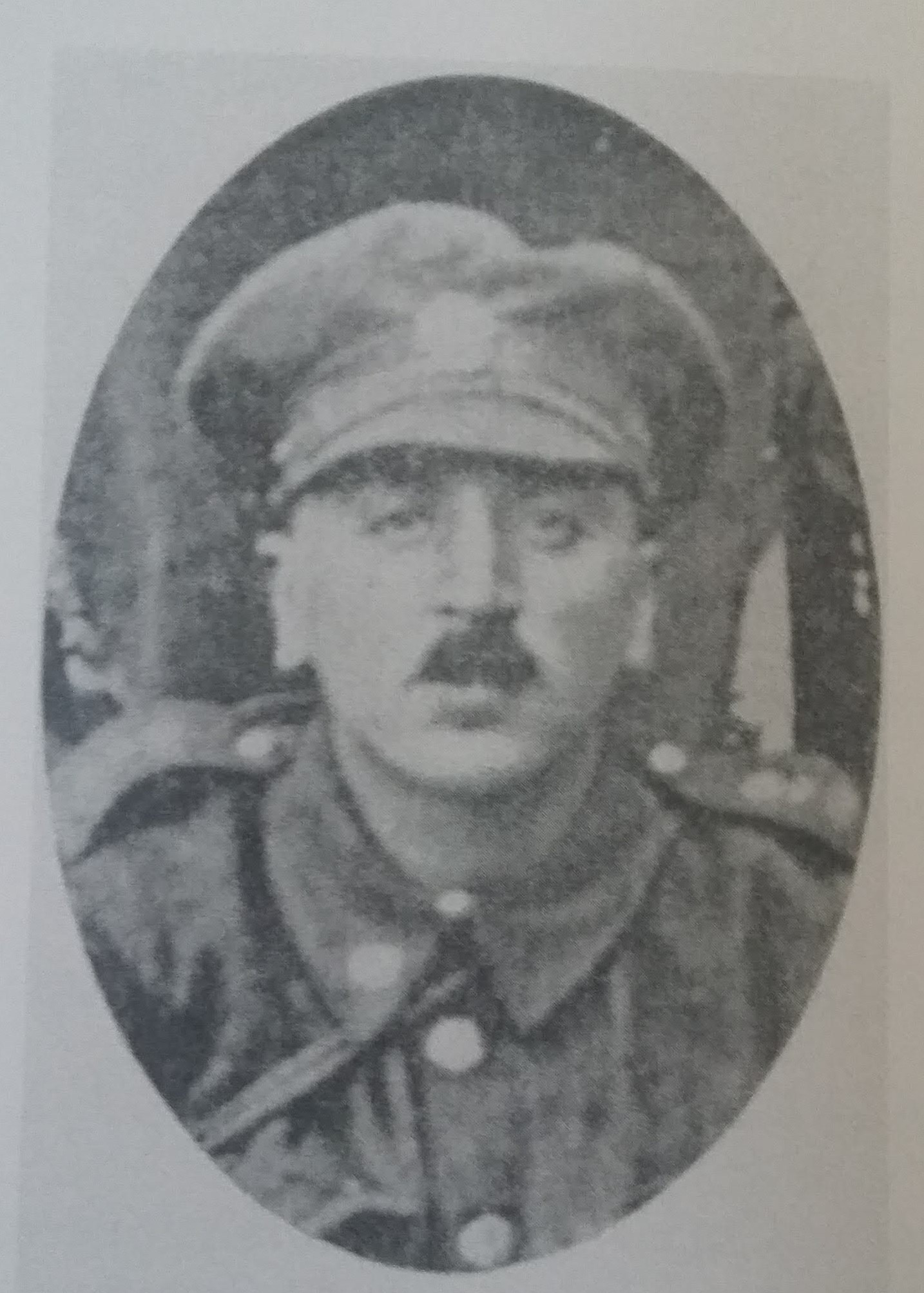
The second was Simeon Lopes Salzedo who was born in 1892; he subsequently became a Sergeant in the Second Sportsmen’s Battalion of the Royal Fusiliers. This Battalion fought on the Western Front during the War, in 1916 on the Somme, and, in 1917, at Arras and Cambrai. He transferred to the 39th Battalion (Judeans), the Jewish Regiment that was part of the Royal Fusiliers, when it was formed in January 1918. He arrived in Alexandria in April 1918 and he saw service in Palestine, Syria and Egypt, taking a unique collection of photos over the next nine months. His daughter, Grace Duban, donated 134 photographs of family and military interest to the Manchester City Archives and to the Manchester Jewish Museum, some of which feature in this article.

The third Salzedo to serve in the British Army was Solomon (Sidney) Lopes Salzedo, and he enlisted at the start of the War, becoming a Lance Corporal in the 23rd Battalion of the Northumberland Fusiliers. His family recall him losing an eye during the War. He had previously pursued a career on the stage, performing as Sidney Brandon (his mother’s maiden name) in 1908 when only thirteen. After the War, he continued performing on the stage, and he subsequently worked at the Windmill Theatre, London, both before and after the Second World War.

Another son, Abraham Lopes Salzedo, was extremely well-read and took a keen interest in local Jewish Literary and Debating Societies; he was a founder member of the Young Men’s Zionist Society in Manchester. In October 1917, he was appointed by the Withington Congregation of Spanish and Portuguese Jews as collector/shamash, as assistant at its Talmud Torah on Central Road, West Didsbury, and as assistant to the Synagogue Secretary. His salary was £2 per week; he resigned in January 1920. He only lived in West Didsbury for three years, opening a grocer’s shop at 21 Lapwing Lane, a business that was then continued by Max Samuels. By another strange coincidence, my father would have attended barmitzvah classes at this Talmud Torah at just the time when Abraham was teaching there.

Captain Raffael Abraham Besso was born in 1886. He was the grandson of Corfu-born Raffael Besso, a founder in 1872 of the Cheetham Hill Road Spanish & Portuguese Congregation; the family had established a cotton shipping business in Manchester in the 1850s. On his death in 1887, Raffael (Senior) left an estate equivalent in to-day’s money to £2.6 million. In 1911, the family business was Raffael Besso & Co., Calico Printers and Manufacturers. Captain Besso’s parents lived in Southport and he was educated at Clifton College, Bristol, one of the country’s leading public schools and which had its own Jewish House, Polack’s House. Captain Besso would have been a member of the school’s Cadet Corps and this would have stood him in good stead when he sought a Commission at the start of the War. He was commissioned as Captain in 1914 into what became, in 1916, the Regiment of Yeomanry, Lincolnshire (Lancers). There were three members of the large Besso family that appeared on the Spanish & Portuguese Congregations’ Roll of Honour, and this large family founded the independent Besso Synagogue in Bent Street.

Officer/Cadet Moise Jack Torres was born in Manchester in 1896 and he was the son of Elia Torres who was born in Salonika in 1867. He joined the 2nd Batallion, the Manchester Regiment, and his Medal Card shows “Entry into War 5/5/1915”. He lived on Old Hall Road, Broughton Park. His name also appears on the Spanish & Portuguese Jews Roll of Honour. His uncle Sidney (Saul) Torres, from Goulden Road, West Didsbury, was killed on the last but one day of the twenty-week long Battle of the Somme in November 1916.

© Basil Jeuda October 2014

Contributors

Basil Jeuda is a former Chair of the Manchester Jewish Museum Trust. He has been researching, lecturing, and writing on the history of Manchester’s Sephardi community for nearly 30 years. He comes from a long-established Sephardi family in Manchester that dates back over 130 years, whilst one strand of his mother’s Ashkenazi family can be traced back to a wedding at the Spanish & Portuguese Synagogue, Bevis Marks, London, in 1760.

World War One and the Manchester Sephardim is published by the Shaare Hayim Sephardi Congregation of South Manchester, price £9.99 plus £2 p&p, and can be purchased from the Synagogue and from the Manchester Jewish Museum.

Give us your feedback

Please tell us what you think to help us develop and progress this vital resource

London Jews in the First World War - We Were There Too

Follow us on social media:

  • Twitter
  • Facebook
  • Instagram

© London Jewish Cultural Centre 2018

Website by Beachshore