





In a book following the war, one of those interns J Davidson Ketchum (Ruhleben: A prison camp society, by University of Toronto Press 1967) wrote about the emergence of anti-Semitism in the camp tying it directly to the separation of the Jews in Hut 6. He notes how Jews were stereotyped in the camp by the other internees and that Hut 6 inmates experienced prejudice, a lot of which was expressed in the magazine articles and shows. While the prejudice was not violent it was demoralising and divisive.
Ketchum also notes that once Hut 6 was closed down as barrack quarters the anti-Semitism largely disappeared, which he believed was due to the fact that the Jewish inmates were no longer separated off. He also believed that the anti-Semitism in the camp reduced due to increased restraint and the protestations of the Jewish inmates and others. This is probably because the Hut 6 inmates were not afraid to speak about the stereotyping and prejudice.
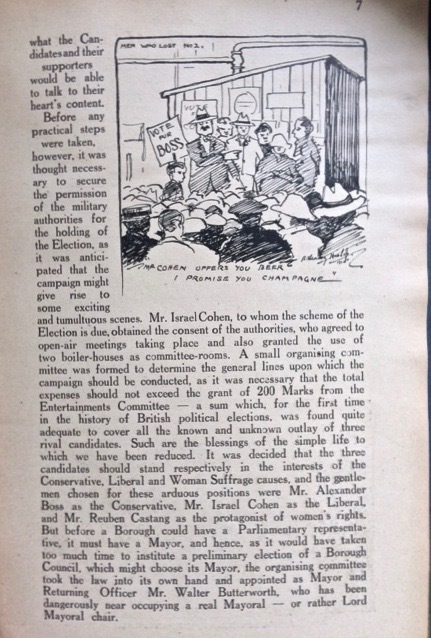
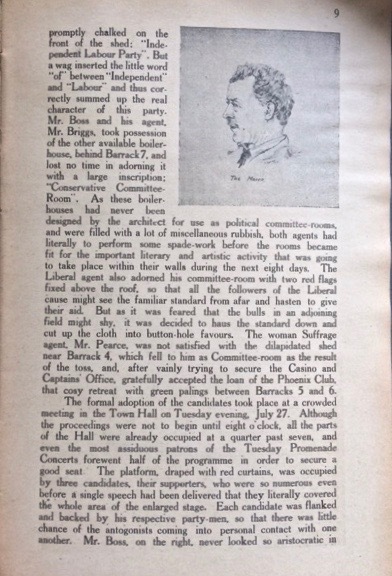
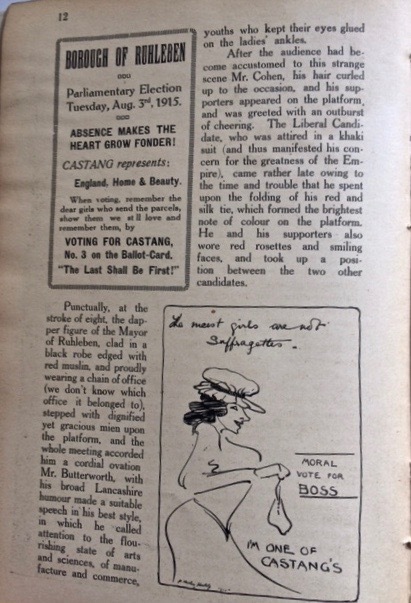
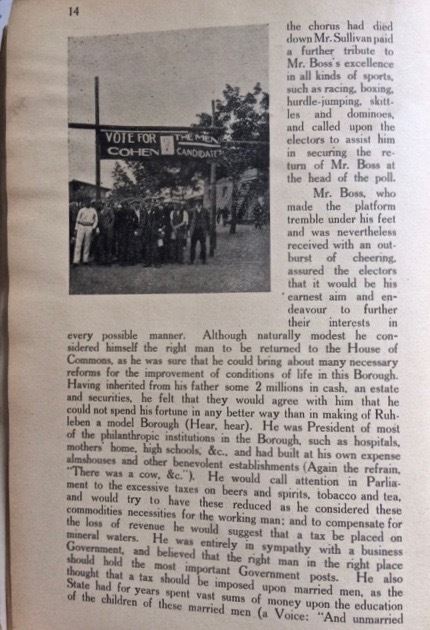
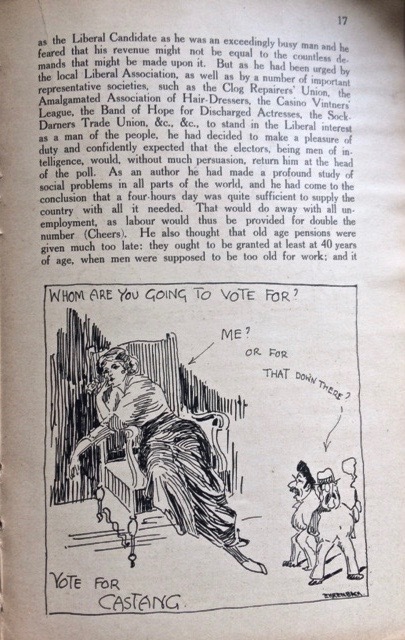
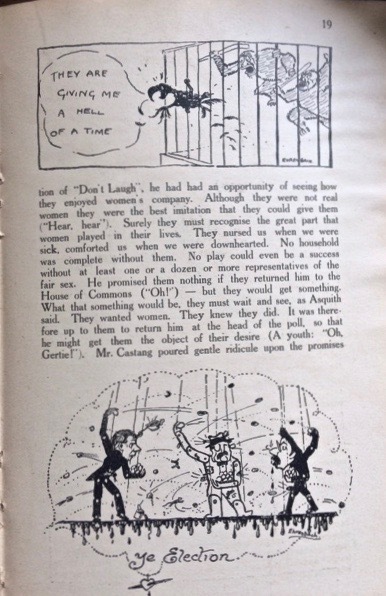
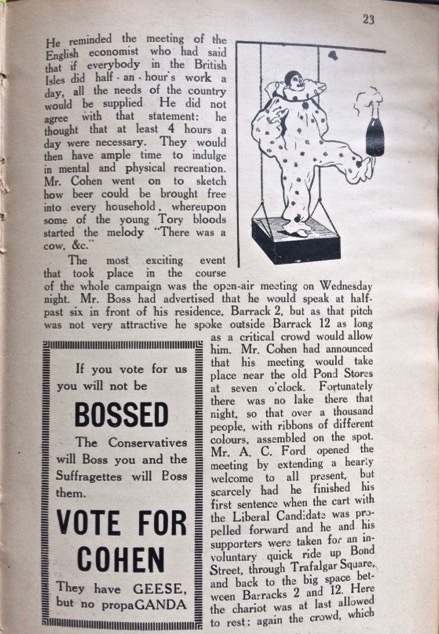
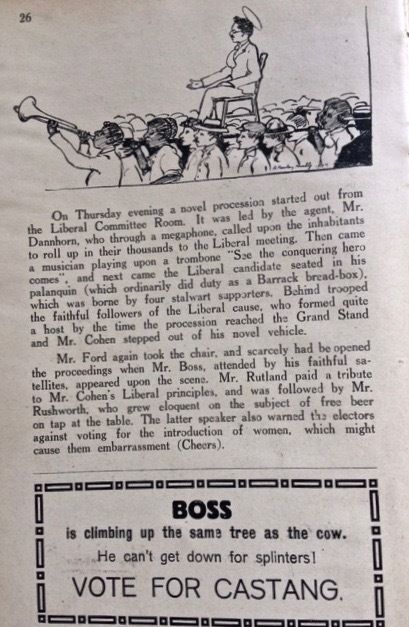
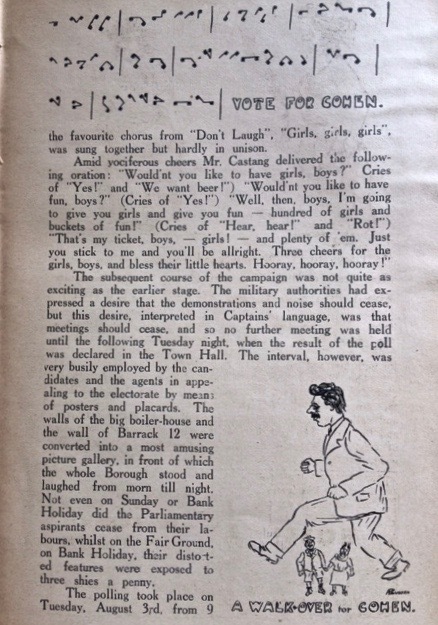
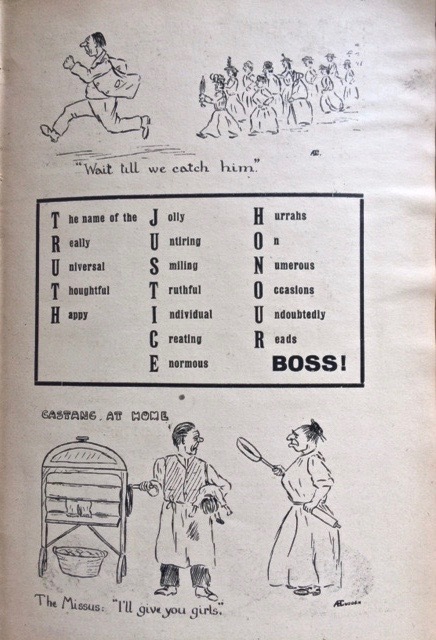
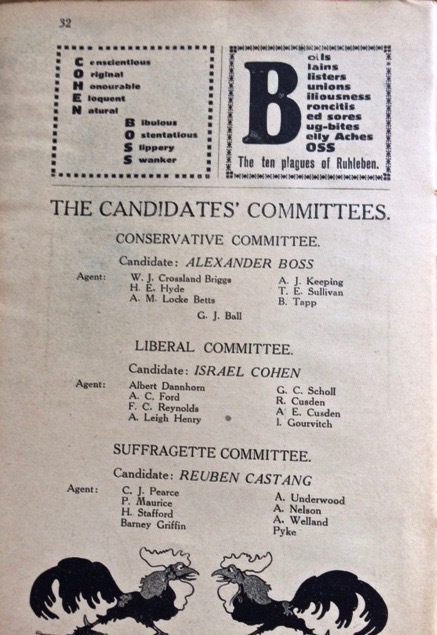
One inmate in particular, Israel Cohen, stood against any prejudice that he heard about and his popularity as well as strong character was enough to deter some of those who would otherwise have continued the taunting. Israel Cohen was a journalist who had worked for the Globe and Glasgow Herald newspapers. He was holidaying in Germany when the war broke out. While in Ruhleben he was part of the Debating Society and took an active part in camp life. In July 1915, he and another inmate famously held a mock by-election to present some tongue in cheek political excitement in the camp. Their views, ideas and hustings were all presented in the Ruhleben magazine. He was released from the camp after 19 months as part of a prisoner exchange and went on to write "The Ruhleben Prison Camp: A Record of Nineteen Months' Internment".