• A
  • A
  • A

Jewish Community of Gibraltar

Due to its position in the Mediterranean, Gibraltar played an important role in the First World War; as an important base for both the Royal Navy and US Navy, a vital port for goods and supplies, and as a base for the Royal Army Medical Corps to treat wounded soldiers particularly from the Dardanelles campaign in Gallipoli.

During the First World War, a group of local members from the Calpe Rowing Club established the Gibraltar Volunteer Corps (GVC). The intention was to show their loyalty to the British Crown and to prepare for the defence of Gibraltar. The GVC got official recognition from the Governor, Lieutenant General Sir Herbert Miles on 3 July 1915 at a march held on the upper emplacement of Wellington front. As well as defence duties, the GVC played a big role assisting the civil agencies rebuild roads and remove sand and rocks from dwellings after the heavy storms and subsequent landslides of March 1917.

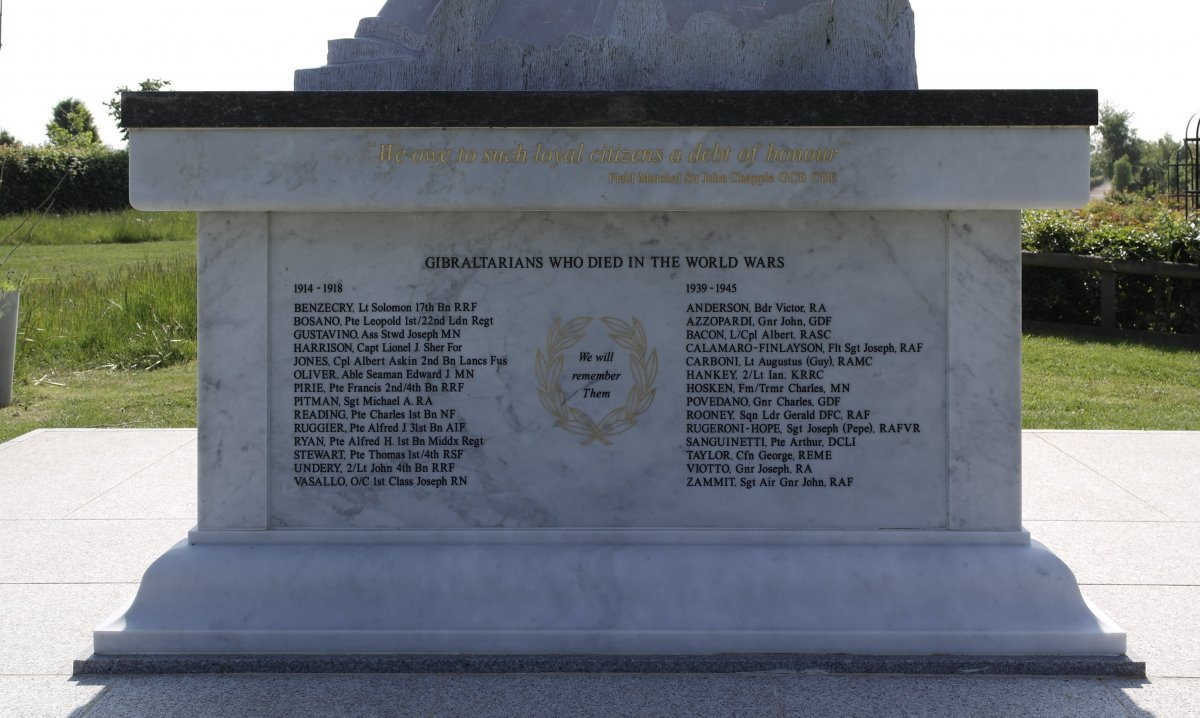
As in all walks of life members of Gibraltar’s vibrant Jewish community volunteered and served in the newly formed unit. The purpose of the Corps was to defend the Rock, but many went on to join British operational units fighting on the front line. The names of the fallen are inscribed on the Gibraltar memorial at the National Memorial Arboretum. Gibraltarian women also volunteered to serve as nurses.

The British Military Hospital on Gibraltar had the capacity for around 300 beds, and became the Royal Army Medical Corps base during the 1915-16 Dardanelles campaign, taking in wounded military personnel from the Australian, New Zealand and British forces. The Gibraltar Volunteer Corps had the difficult task of providing assistance as stretcher-bearers, carrying the wounded personnel to hospital from the harbour. Temporary satellite hospitals had to be set up because of the high numbers of wounded personnel arriving.

Due its location, Gibraltar became one of the most important naval bases in the Mediterranean, taking on ship repair, refitting and maintenance. The harbour also became one of the most important meeting points for convoys passing through the Mediterranean. The commercial port bunkered over 1.5 million tons of coal during the period 1914 – 1918. This enhanced job prospects for labourers and dock workers, and there was more opportunity for employment for the people of Gibraltar.

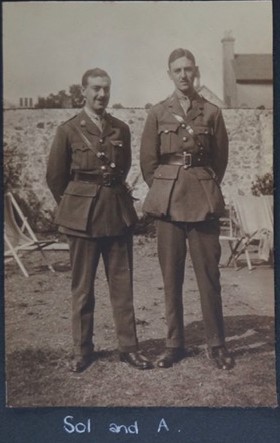
The most prominent members of the Jewish community of Gibraltar who served were two brothers, Solomon and Abraham Benzecry. Solomon served with the GVC and had volunteered for military service in 17th Bn The Royal Fusiliers and was commissioned as Second Lieutenant in 1915; promoted to Lieutenant a year later.

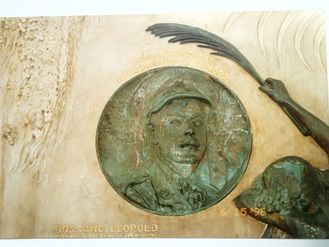
On 30th November 1917, during the Battle of Cambrai, Solomon’s company was subject to a German attack while sapping at a forward outpost near Bourlon. Though ordered to retreat to the front line, Solomon and Captain Walter Stone, his superior officer, chose to remain behind with one platoon to allow the remainder of the company to retreat safely. Solomon was wounded in the head, but continued to fight until killed. He was nicknamed the “Hero of Bourlon Wood” and is honoured with a memorial at the Gibraltar Parliament.

At the outbreak of war, Abraham Benzecry was in his final year of education at Polack’s House, Clifton College, Bristol. Abraham enlisted in 1916, and so may have volunteered, or may have been enlisted in the first wave of conscription.

Abraham received a Military Cross towards the end of his service, in September 1918. His medal card states that at this point he was serving in the Machine Gun Corps, attached to 164th Company. His company was stationed on the Western Front for most of the war; however, Abraham’s Military Cross was for action in what is now Israel. It was at the action at Tira, near Haifa that he was awarded the Military Cross.

A younger brother, Jimmy, was dismayed to find that he was rejected by the Army on medical grounds. The official who rejected him suggested, by way of consolation, that he could best help by becoming a doctor. So instead of following his talents as a brilliant classic scholar who was to have gone to Cambridge, he instead enrolled in medicine at University College, London, and would practice as a doctor for the rest of his life.

Like all Gibraltarians, the Jewish community on the Rock was fiercely loyal to the Crown and others joined up, either via the GVC or direct into British units. Members of the Benzimra family answered the call and Lieut Felix Joseph Benzimra enlisted as a clerk in Gibraltar and later commissioned into Dorsets, transferring to the Hampshires and then the Machine Gun Corps. He was awarded the Military Cross for conspicuous gallantry. Although twice buried and gassed while commanding a forward position, he refused to leave his post.

Other Gibraltarian Jews who served during the First World War included Sgt J Conquy of the Royal Army Medical Corps, the son of Rabbi Shalom and Arobida Conquy. He later died of wounds in Tangiers. Lance Corporal Jacob Mattana served with the Honourable Artillery Company, Mesod Haim Levy, the son of a beef contractor served with the Royal West Kent (The Buffs) which was known to have a Jewish company. Another member of the Benzimra family, Benjamin, joined the Manchester Regiment. Many Gibraltarians had close links and family in Manchester, often through the textile trade, but we don’t know if this influenced his choice of regiment. The Jewish Museum in Manchester has a plaque in memory of a Captain Cansino, a family with Gibraltar connections, and another Captain Cansino is buried in the Jewish section of the city’s Southern Cemetery. There are also links with Bevis Marks Synagogue in the city of London and Lt Solomon Benzecry appears on its WWI Roll of Honour. Some young Jewish women from Gibraltar also served as nurses during the war, at home and on the front line.

From information provided by Lt Col Francis Brancato OBE, Honorary Colonel and historian, Royal Gibraltar Regiment and edited by Col Martin Newman MBE DL, Colonel Cadets Royal Gibraltar Regiment.

Other Sources:

Gibraltar National Archives

Gibraltar Timeline

Find out more about the members of the Jewish community in Gibraltar during the war on their Personal Records below.

Give us your feedback

Please tell us what you think to help us develop and progress this vital resource

London Jews in the First World War - We Were There Too

Follow us on social media:

  • Twitter
  • Facebook
  • Instagram

© London Jewish Cultural Centre 2018

Website by Beachshore