• A
  • A
  • A

Hull Jewish Community and the Old Hebrew Congregation


Hull: A Hub for Migration

Hull has long been one of the major ports of entry into the UK (see 'Jewish Communities in Port Towns and Cities' History Window). Of the tens of millions of people who left Western and Eastern Europe for America between 1850 to 1914, some 2 million passed through Hull. A further 1 million passed through nearby Grimsby. About 1 in 4 of these trans-migrants were Jews: in excess of 500-600,000 people.

The sheer volume of people was placing a great strain on infrastructure, with overcrowding and poor sanitation becoming a huge problem. In 1851, the Kingston Upon Hull Urban Sanitary Authority was created to improve conditions. Its creation was based on Acts passed in the late 1840’s on the national need to improve conditions in cities and combat diseases such as typhoid and cholera, Hull being no exception.

Large numbers of migrants stayed in the UK and were dispersed by railways to Manchester, Leeds and Liverpool. The rail companies established waiting rooms with special facilities for their passengers, such as in 1871 near Paragon Station. Such was the demand that within 10 years, by 1881, it was doubled in size.

Permanent Jewish Settlement

Permanent Jewish settlement in Hull began in the 1750’s with some 40 people in 1793, 60 in 1815 and 200 by 1835. The first recorded synagogue was founded in 1780 on Posterngate. A breakaway synagogue was founded on Parade Row in 1809, before these two congregations merged in 1826 to form the Hull Hebrew Congregation, based at new premises in Robinson Row. This would be the only synagogue in Hull for the next 40 years.

In the late 19th century and the beginning of mass migration of Russian Jews fleeing oppression, Hull’s permanent community grew. In 1881 the Hull Daily Mail reported that there were thought to be “six to seven hundred Jewish families in the borough”, and the synagogue could currently accommodate just 130 worshippers. This led to the establishment of the Hull Central Hebrew Congregation, originally housed in a building on Waltham Street, before moving to Cogan Street in 1914. In 1903 a further synagogue, the Hull Western, opened in Linnaeus Street. It was at this time that the Hull Hebrew Congregation became known as Hull Old Hebrew Congregation, and they moved into larger premises on Osborne Street. By then, the city’s Jewish population was estimated at around 2,500 people.

Hull Old Hebrew Congregation and its Minute Book

The minute book of the meetings held by the Hull Old Hebrew Congregation Committee, digitised and reproduced with kind permission of Hull History Centre, despite only the pages covering November 1915 - December 1917 surviving, gives us an insight into what sort of issues arose during wartime, and what decisions the committee made to find solutions.

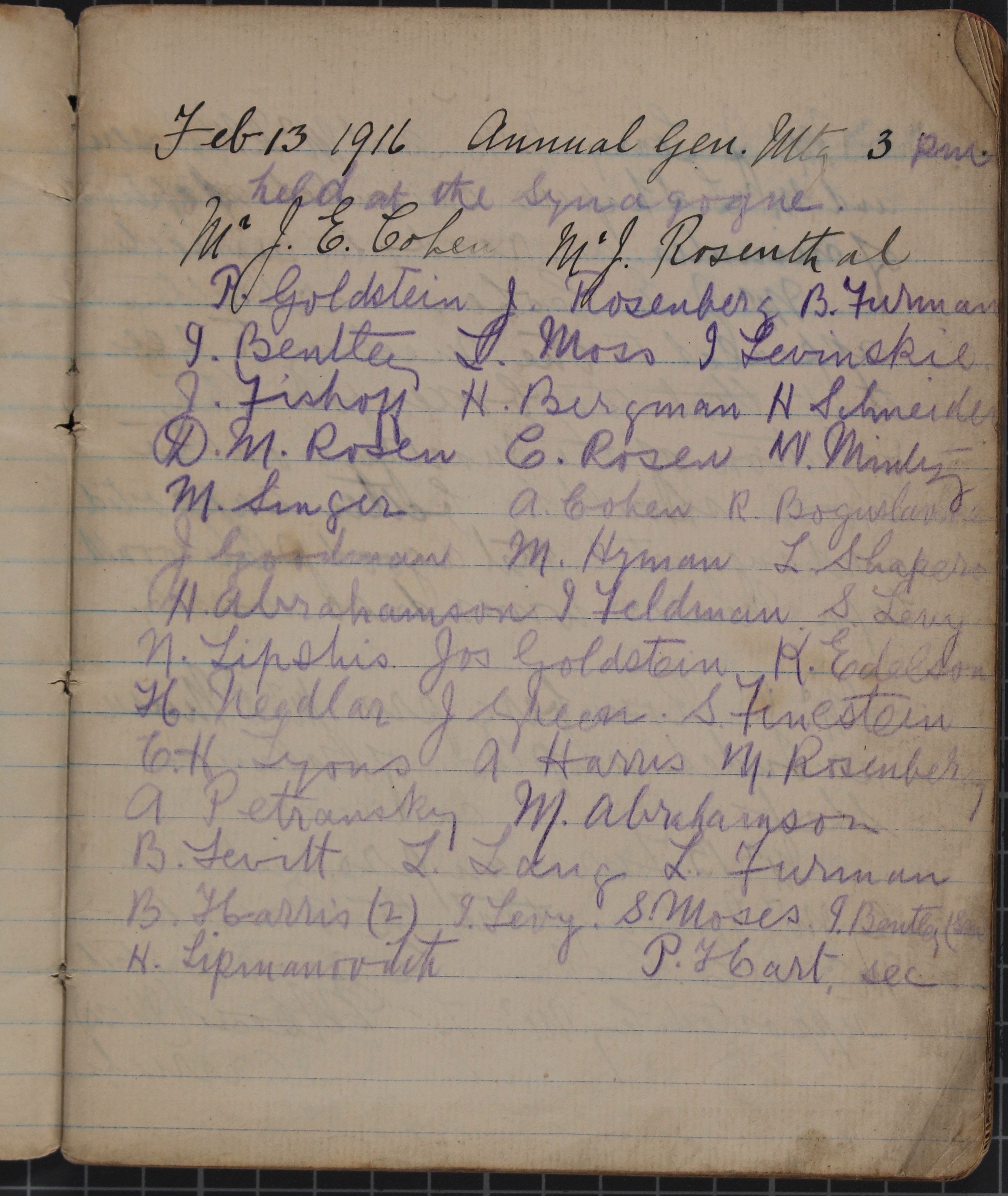
The committee met monthly, and were responsible for all of the administerial affairs of the synagogue. The members of the committee were elected at each Annual General Meeting of the congregation, and in February 1916 the following were elected to the Hull Old Hebrew Congregation Council committee: Mr J.E. Cohen, President, Mr J. Rosenthal, Treasurer and Mr P. Hart, Secretary. Mr J Levy and Mr M Singer were elected to replace members who had moved away, and the rest, a further 12 men, were all re-elected. Women at this time were not eligible to become members of the congregation’s council.

Those who wished to become a member of the synagogue would write to the committee, and it would decide whether or not to accept their application. Most during this period were accepted as ‘6d members’ (sixpence members - sixpence in current currency is 2.5 pence, and in 2022 purchasing power, has an equivalent value of about £1.73). These fees would go towards the upkeep of the synagogue and other expenses of the congregation. There was also the option to ‘upgrade’ memberships or pay to become a seat holder, and this would often come with more privileges and influence within the congregation, such as more desirable burial plots and the chance to become a committee member.

Many families struggled financially due to effects of the war and struggled to pay their membership fees. For example, in April 1917 a Mr J M Peysner announced that he could not afford to pay off any arrears he had accrued until after the war, and this was accepted by the committee. Others had to give up their memberships altogether, such as serving soldier Abraham Bass.

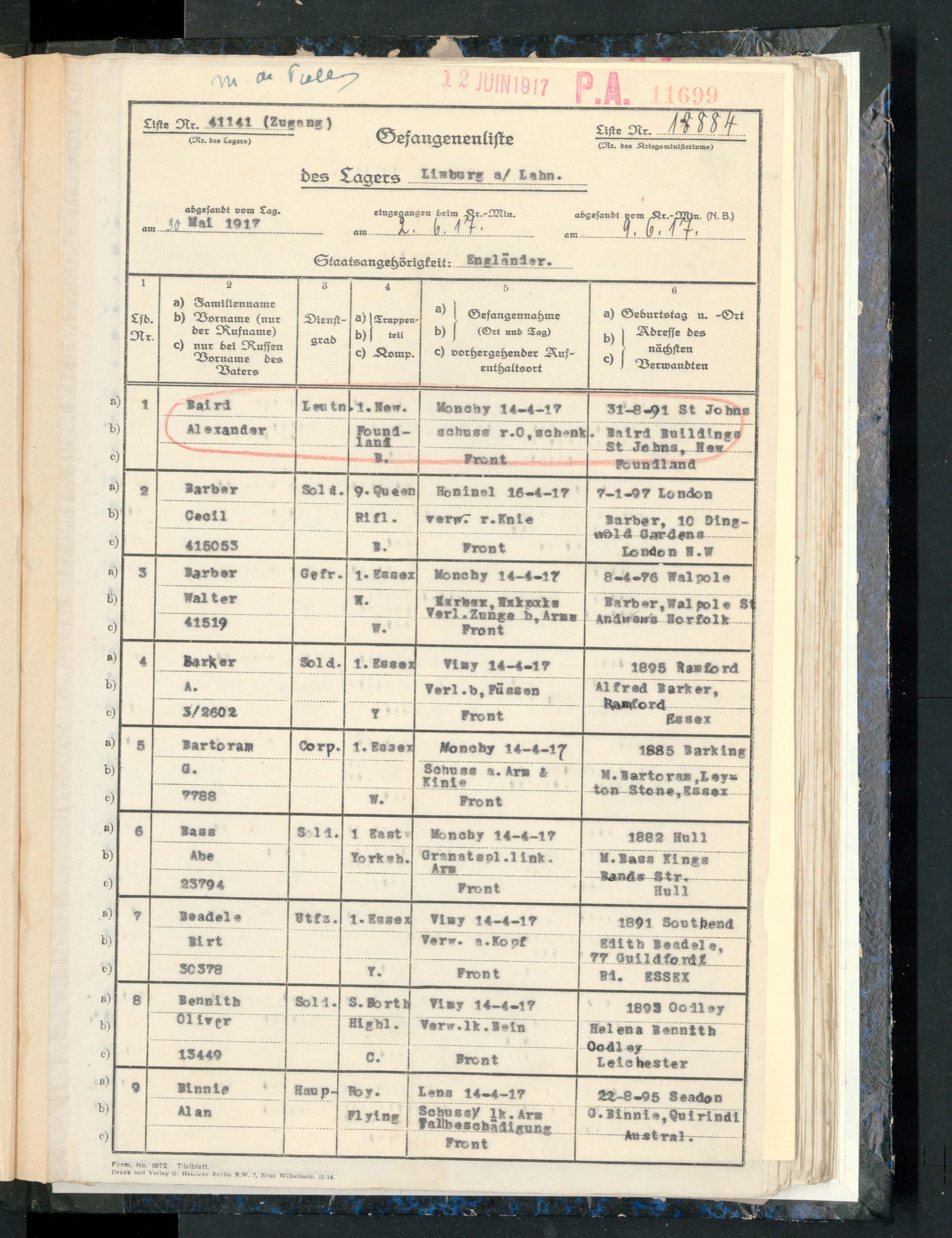
Abraham was born in Hull in 1886 to Russian-Polish parents and was a salesman outfitter in his father’s tailoring business. He enlisted with the East Yorkshire Regiment in May 1915 and served on the Western Front before being captured by the Germans in Arras, Northern France in April 1917. He was taken to Germany as a Prisoner of War and was released and returned to Britain in January 1919.

In November 1917, the minute book records that the committee received a postcard from Abraham’s sister, Miss Bass, stating she was sorry that she could not keep her brother’s seat any longer, as he was a POW.

One of the main themes that comes across in the minute book is that of cooperation with the other congregations in the city. In October 1916, letters were sent to the Western Synagogue and the Central Hebrew Congregation “re a general conference as to the advisability of forming a Communal Council to deal with matters affecting the congregations and the community more generally.” In the next month’s meeting, members were elected to the newly created Hull Hebrew Communal Council.

One of the issues affecting all congregations was how to help those in need due to the war. In March 1916, thoughts turned to Passover, and how best to support Jewish servicemen during the holiday. After discussion, “with ref to providing for Jewish soldiers who might be in need for Passover, it was decided to approach the other congregations in Hull to join us.”

Hull’s Jewish community had a history of charitable organisations, mostly set up to help those arriving from overseas, and deal with the problem of Jewish poverty. In 1880 the Hull Hebrew Board of Guardians was established to coordinate and oversee these charitable efforts. In September 1917, the Board arranged a meeting, inviting the heads of the community “with a view of forming an advisory committee and also assisting in any case of hardship which may arise in connection with the new Military Order calling up Russian subjects in England to serve in the British Army in the event of their remaining in this country.”

The Military Service Act of 1917 meant that Russian Jews were at risk of being deported if they did not enlist in the British army, and this led to hardship particularly for families left behind (see 'Russia or Britain – take your pick!' History Window). Many Russian Jews had settled in Hull after arriving into the port, fleeing persecution in their countries of origin, so a large portion of the community in the city will have been affected.

Hull Jewish Community in the British Army

Over a hundred members of the Hull Jewish community served in the British army during the First World War, and the committee were concerned with recording their names in remembrance. In April 1917 it was decided that a sub-committee be formed to deal with the matter of creating a Roll of Honour for this purpose.

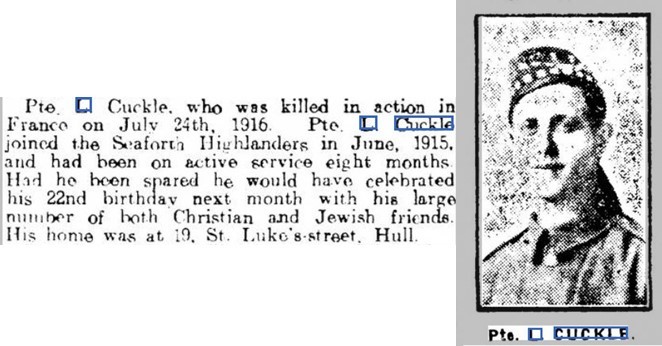
Many of those members who served lost their lives. Louis Cuckle and Harry Furman were killed in action serving on the Western Front. Their families were sent letters of condolence by the committee, and it is recorded that Mrs Cuckle presented the synagogue with 6 chumashim (books of the Torah in print) and 12 siddurim (Jewish prayer books) in memory of her son.

Louis, who served with the Seaforth Highlanders, was killed on 24th July 1916, one month from his 22nd birthday. Harry reportedly lost his leg whilst trying to rescue his friend Simon Levine serving with the East Yorkshire Regiment and died of his wounds on 16th January 1917. Both men featured in the local newspaper the Hull Daily Mail following their deaths. Read more about their stories on their Personal Records below.

An important moment in Anglo-Jewish history

In the meeting of November 18th 1917, a copy of the letter sent by Arthur Balfour to Lord Rothschild (now known as the Balfour Declaration), announcing the British government’s support of “the establishment in Palestine of a national home for the Jewish people”, sent by the English Zionist Federation, was read out in full.

The English Zionist Federation, later known as the Zionist Federation of Great Britain and Ireland, was founded in 1899 to campaign for a permanent homeland for the Jewish people. The Zionist cause divided opinion amongst the Jewish population in Britain at the time, but in this instance the committee present agreed to send a letter of gratitude to the government on behalf of their congregation.

The surviving minutes end here in November 1917, having begun less than two years prior in December 1915. They give us a snapshot of what life was like for the Hull Jewish community during the First World War; how people responded, and what the priorities were for the leaders of the community.

If you had family in Hull during the First World War, we would love to hear from you. Please contact us at belinda@jewsfww.uk

You can visit the Hull History Centre at www.hullhistorycentre.org.uk and view more of their collections.

Sources

Jewish Gen, https://www.jewishgen.org/jcr-uk/Community/hull.htm 

'The Jews in Hull, between 1766 and 1880 by Israel Finestein', Jewish Historical Studies https://www.jstor.org/stable/29779979?seq=35

Kingston-upon-Hull War Memorial 1914-1918, https://ww1hull.com/furman/


Give us your feedback

Please tell us what you think to help us develop and progress this vital resource

London Jews in the First World War - We Were There Too

Follow us on social media:

  • Twitter
  • Facebook
  • Instagram

© London Jewish Cultural Centre 2018

Website by Beachshore