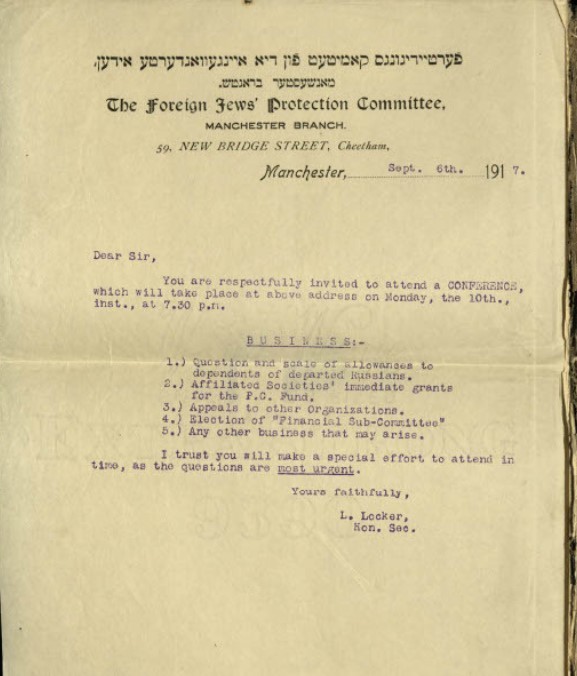


An initial conference was called by the Garment Maker’s Union on 5th August 1917, and a resolution “to establish a Foreign Jews Protection Committee in Manchester” was passed. Elections took place, and roles were assigned to several prominent members of the Manchester Jewish Community, including Mr H. Gogol as Chairman, Mr J Pogarelsky as Vice Chairman and Mr Leon Locker as Secretary. An Enquiry Office was established at 59 New Bridge Street, Cheetham, for members of the community to seek help and advice from the committee.
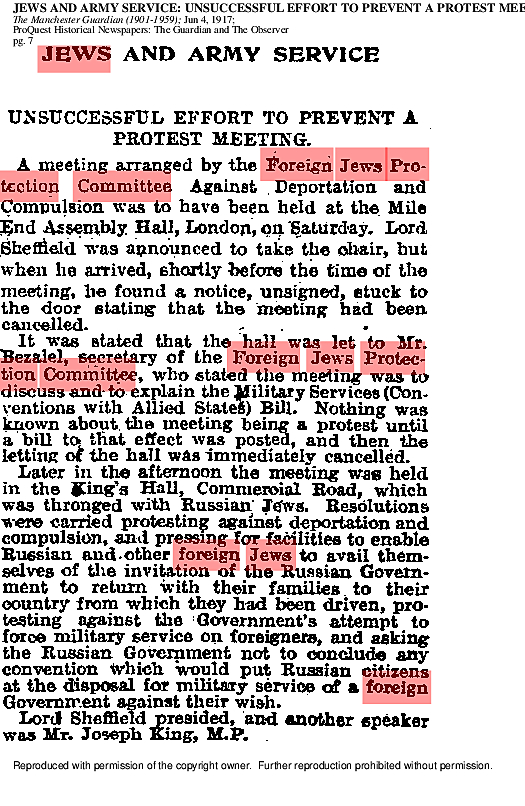
Initially the FJPC had several aims, setting up a meeting with the local Board of Deputies to discuss “possible extension of date for registration to return to Russia” being one, and protesting against a Jewish regiment in the British Army being another. However, the issue of wives and children being left behind by returning Russians needing support became the main focus for the Committee very quickly, with 100 men leaving dependants having registered by the 3rd September.
The first departure of men from Manchester saw 3 delegates from the committee being selected to be at Exchange Station to distribute 200 boxes of 25 cigarettes each amongst those departing Russians on the platform. Some luggage was left at the train station, and Mr Hyman from the FJPC made sure it was sent on to Liverpool, and then personally made his way there to make sure it made its way onto the ship departing for Russia, before making his way back to Manchester.
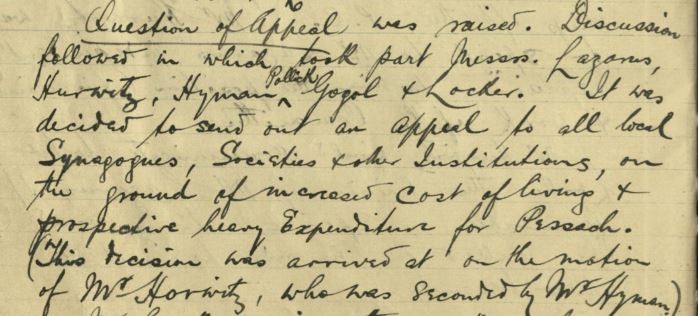
The service was this personal for most cases presented to the FJPC. For example, the minute’s book documents Mrs Wakeman’s case, which saw Mr Hyman and Mr Locker interviewing her landlord and succeeding to have the Ejectment Order she had been served cancelled on promising to pay him £1 on account of arrears, which was paid by Mr Locker and confirmation of the arrangement was received in writing.
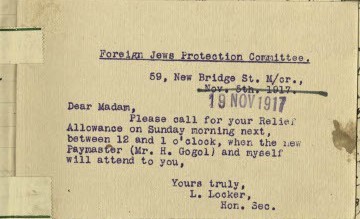
It was decided that dependants were to be paid at a rate of 12/6 for a wife and 2/6 for each child under the age of 16. The first round of payments was made on Friday 14th September 1917, with postcards being sent to recipients advising them to collect their allowances from the New Bridge Street offices between 9am and 12pm that day.