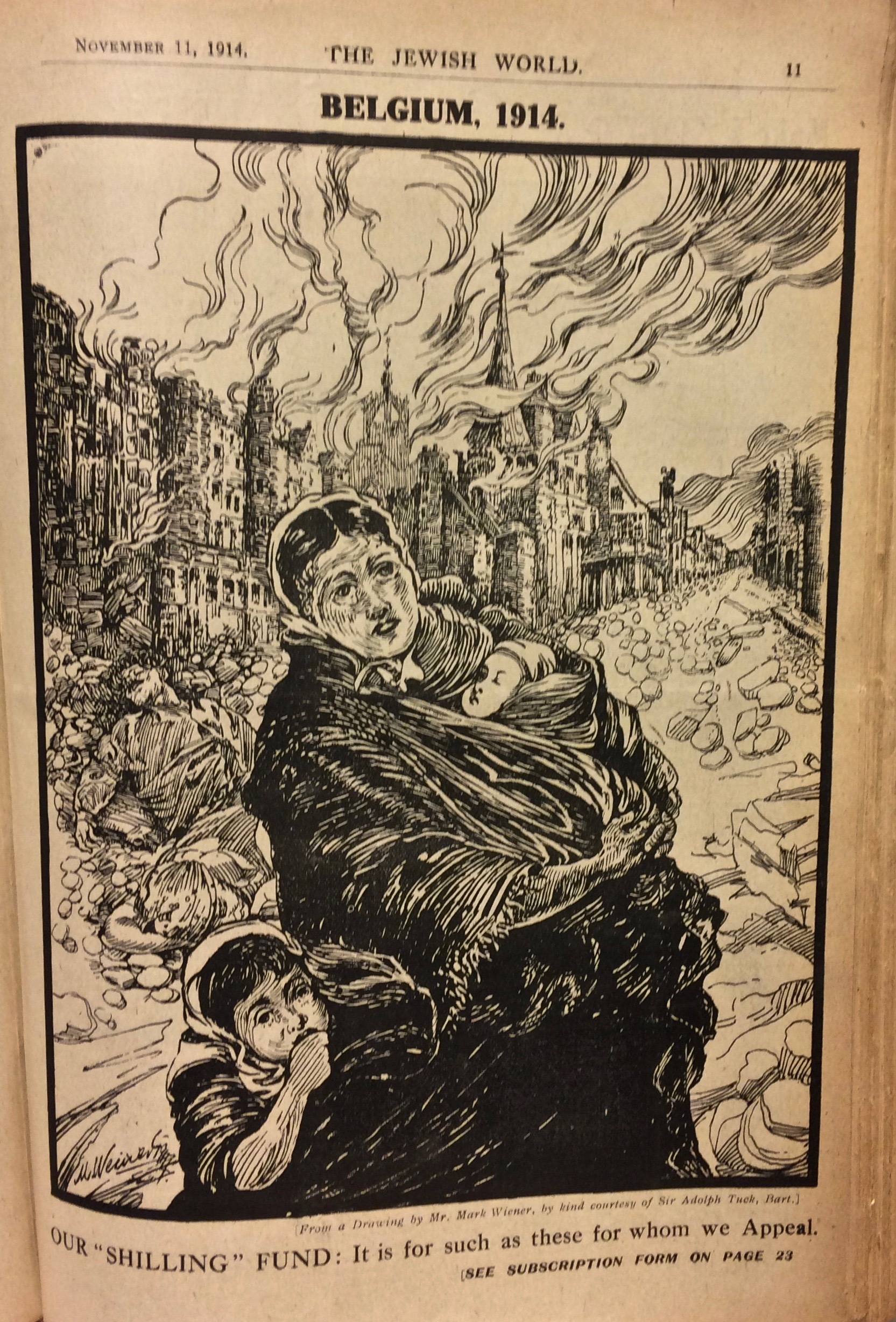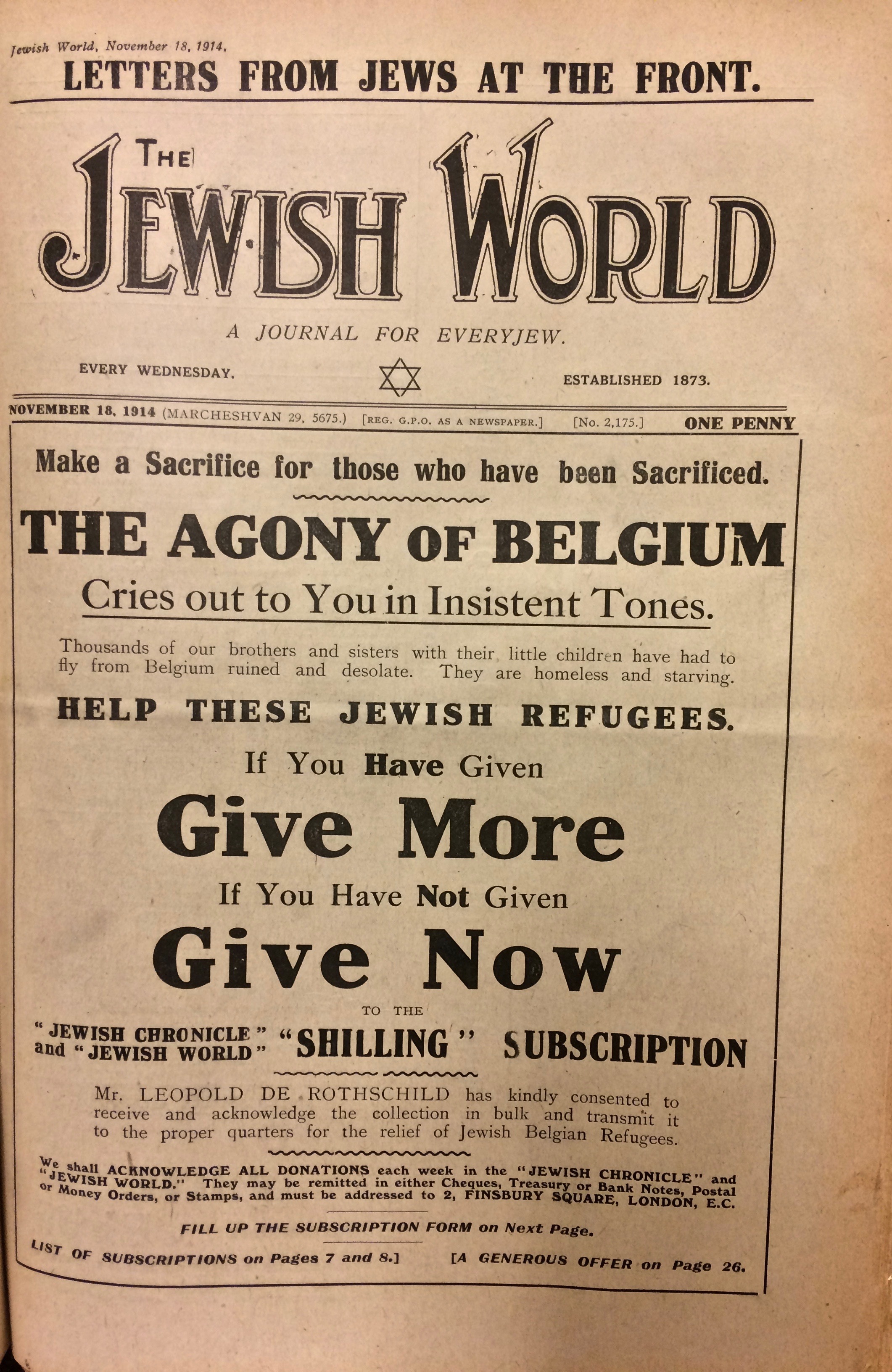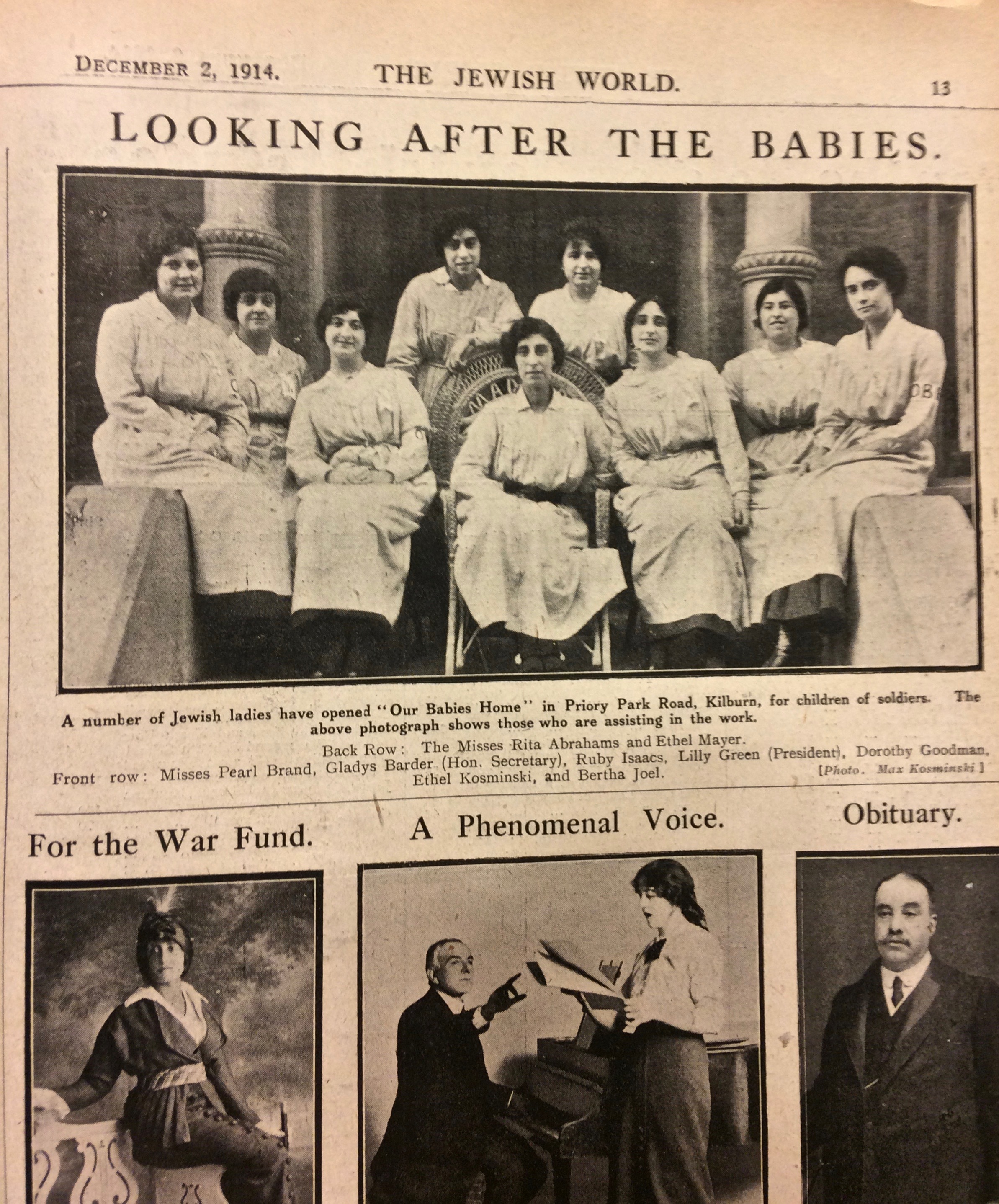


Often when we look at a particular historical event we do so from the knowledge that we now have of the huge impact it had on the world, but of course at the time those changes were not always seen as significant – perhaps how people dealt with the changes was to believe that they were temporary and that when it was all over life would return to exactly as it was before… sound familiar? The newspapers are a good way of exploring this, in particular through the updates on community life. Using these sources you get an idea of how daily life quickly adapted to the new experience of wartime, for example fundraising for poor Jewish communities abroad before the war quickly changed to fundraising for Jewish Belgian refugees arriving into the UK. Prayers for the King now also had prayers for the armed forces. Community squabbles continued and festivals were planned for, all things to be expected, and a reminder of how people quickly overcome challenges to focus on the things that matter in the immediate moments of their daily lives.
This type of information tells us a lot about the character of society, the strengths and weakness of the Jewish community and the resilience that people of all ages showed at a difficult time. It is a reminder that in times of great uncertainty normality is want it to be not what it has always been.
So this week and at this time when I look through the sources that have been gathered for We Were There Too it is less about new interpretations of the war that are coming to light but a greater understanding of how people cope and adapt to change and external pressures. This time it is about providing insights not to conflict but to ensuring everyone has some normality to hold on to, even if the normal is all new.
By Paula Kitching