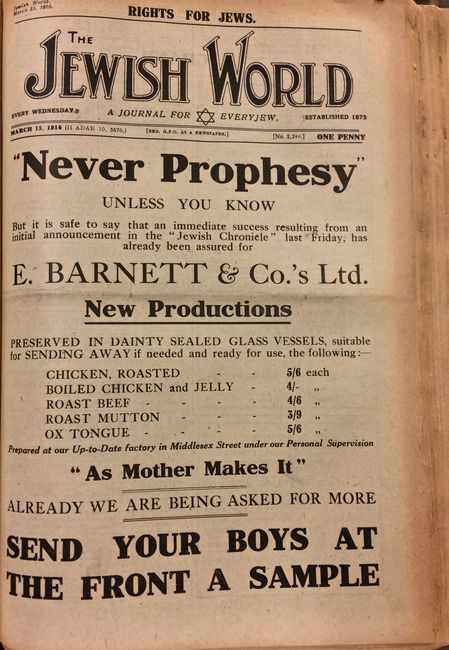
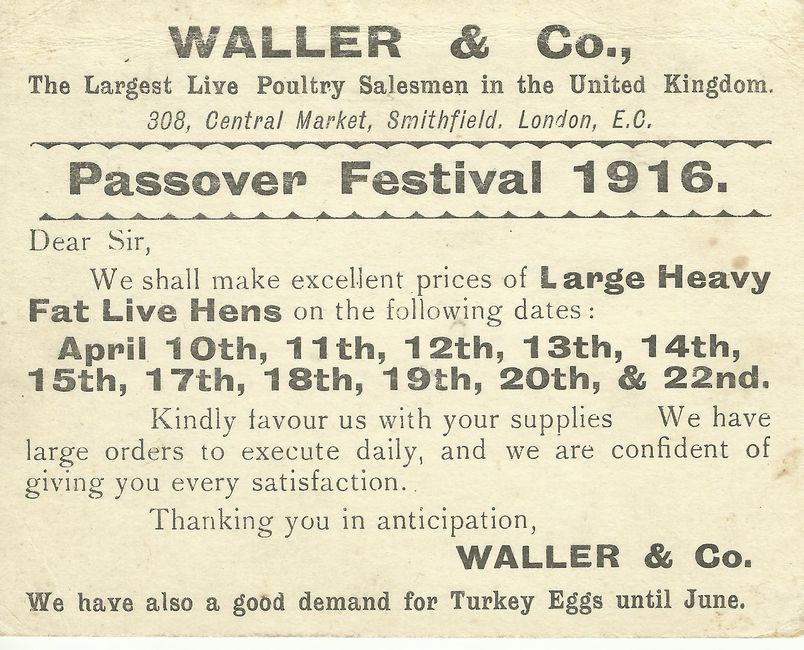
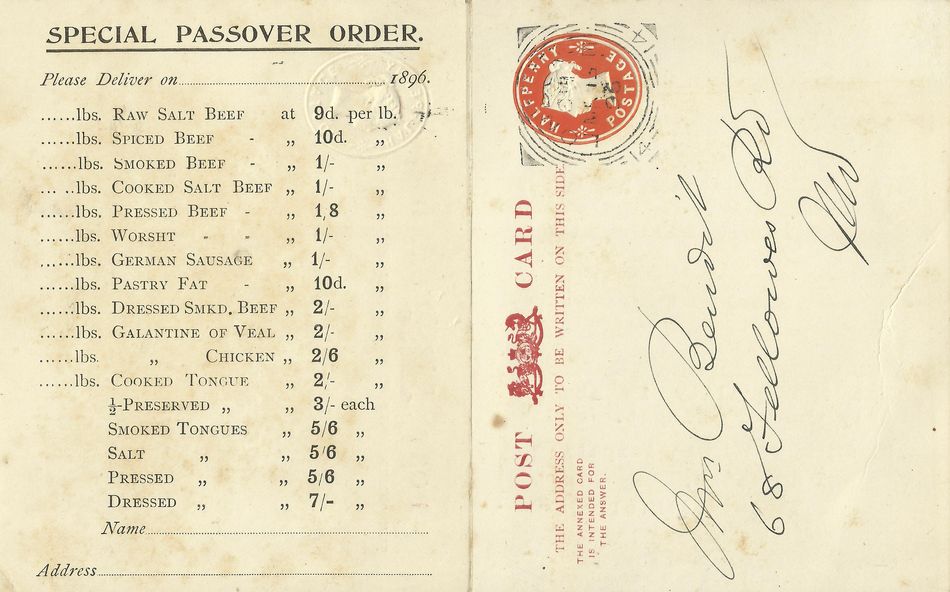
The German Navy threatened supplies reaching the UK from the British Empire and other regions, although their blockade had limited effect even after the German U-Boats resumed unrestricted activities. Some trading partners were no longer friends. Sugar cane came to the UK from the Caribbean but sugar beet was mainly imported from Austria. The result, not surprisingly, was that sugar shortages occurred very early in the war.
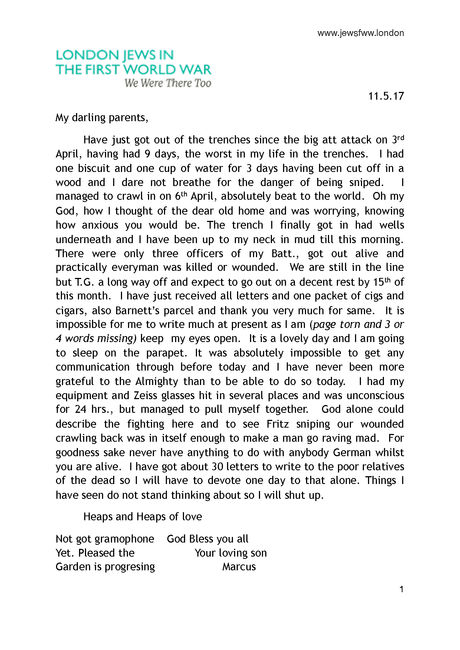
Eventually, people began to be affected by shortages of many goods; foodstuffs, textiles and machinery. As food prices rose across the country, people started to hoard products and fill their larders. Shop owners began to limit the quantities that could be bought to stop individuals and the wealthy taking an unfair share of the goods. Long queues became a regular feature of everyday life.
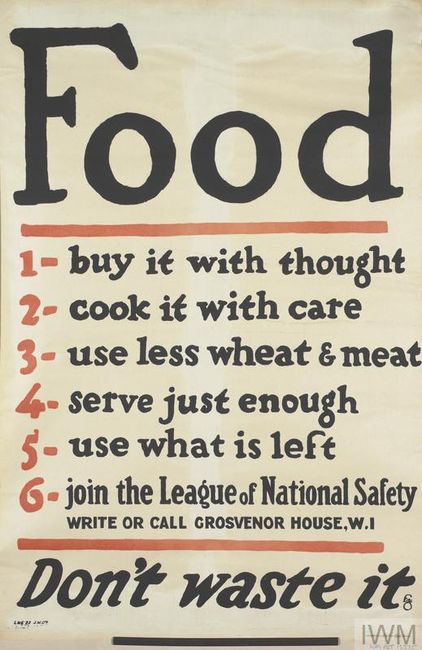
Government campaigns encouraged the British public to consider what they cooked and not to waste food. People who had gardens started to grow their own vegetables and fruit.. Recycling and repair of clothes and household items became a way of life. It is worth remembering that many people did not have a great number of possessions and buying second hand or using ‘hand me downs’ was already the norm.