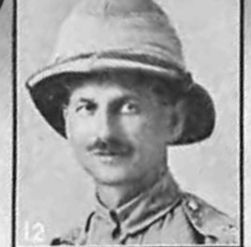
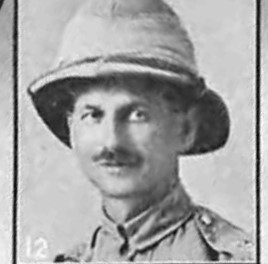
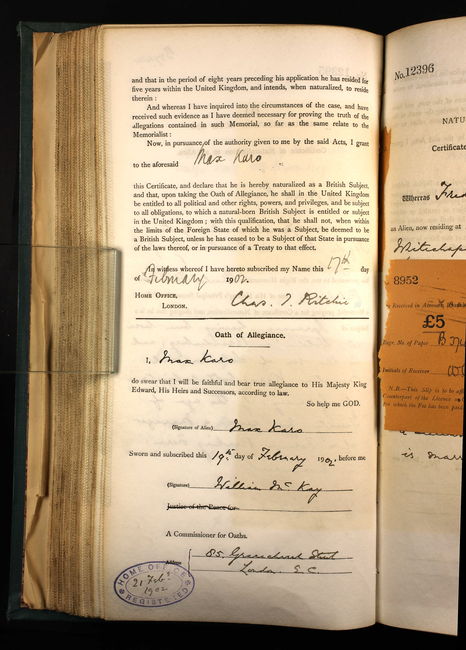
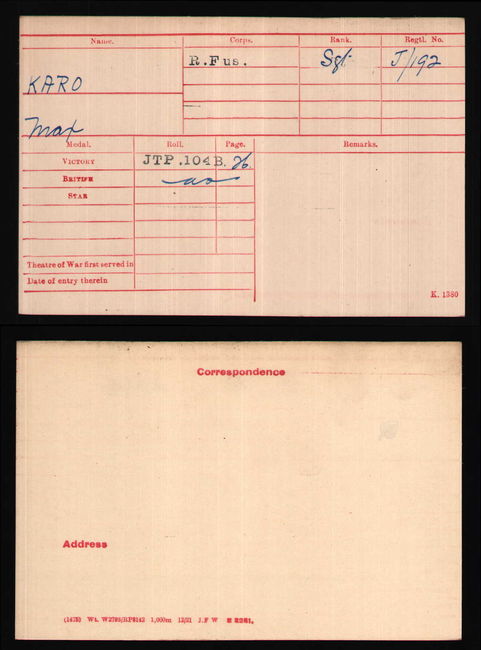
Max Karo MBE "Max"
Born:
10 Iyyar 5636 (04 May 1876)
Died:
18 Adar II 5722 (24 March 1962)
Basic Information
Birth
Date of birth:
10 Iyyar 5636 (04 May 1876)
Place of birth:
Breslau Germany
Date arrived in Britain:
01 December 1896
Death
Date of death:
18 Adar II 5722 (24 March 1962)
Place of death:
31 Queens Gate London SW 7 London
Burial place:
Golders Green
Places
Other Organisations
Name:
City of London Army Cadet Force
Significance:
set up Stocke Exchange Company Army Cadet Force
Significance:
Commission in JLB
Name:
26th Royal Fusailiers (The Bankers)
Name:
38th Royal Fusaliliers (the judens)
Significance:
Company Sergent Major B Company Palistine
Family
Siblings
Dr. Wilhlem Karo "Walter" (male)
Homefront
What was the impact of this:
Came to London with E Spiegel and Co, Bankers, 1909 became UK citizen. member of the 1st City of London Volunteer Corps, before the war 1914 joined the 26th Royal Fusiliers , 1918 joined the 38th Royal Fusiliers as the CSM B Coy. after the war joined the Jewish Labs Brigade, commission 2nd Lt. later joined the City of London ACF joining with Col Sir Philip Carlebach Kt., CBE., CMG., T.D., D.L. in 1926 he set up the Stock Exchange Cadet Company up until 1951, after his forced retirement from the ACF at the age of 75. In 1945 given the MBE for service tot he Army Cadets. Founding member of the Stock Exchange Cadets Old Boys Association. and set up the Stock Exchange Football Cup
Military Record
Military record no.:
J/192
Date enlisted/conscripted:
01 January 1914
Date discharged/death:
01 December 1918
Rank at discharge/death:
Sargent Major WO2
Assignments
Regiment:
38th Royal Fusiliers
Campaigns:
Battle of Megiddo
Gallery
1950 Stock Exchange Cadets
Max Karo MBE can be seen as the white haired man next to the new OC of the SEC Maj S.S. Scales and old cadet of the SEC who ended up running the unit in the 1950s
1950 Stock Exchange Cadets
Max Karo MBE can be seen as the white haired man next to the new OC of the SEC Maj S.S. Scales and old cadet of the SEC who ended up running the unit in the 1950s