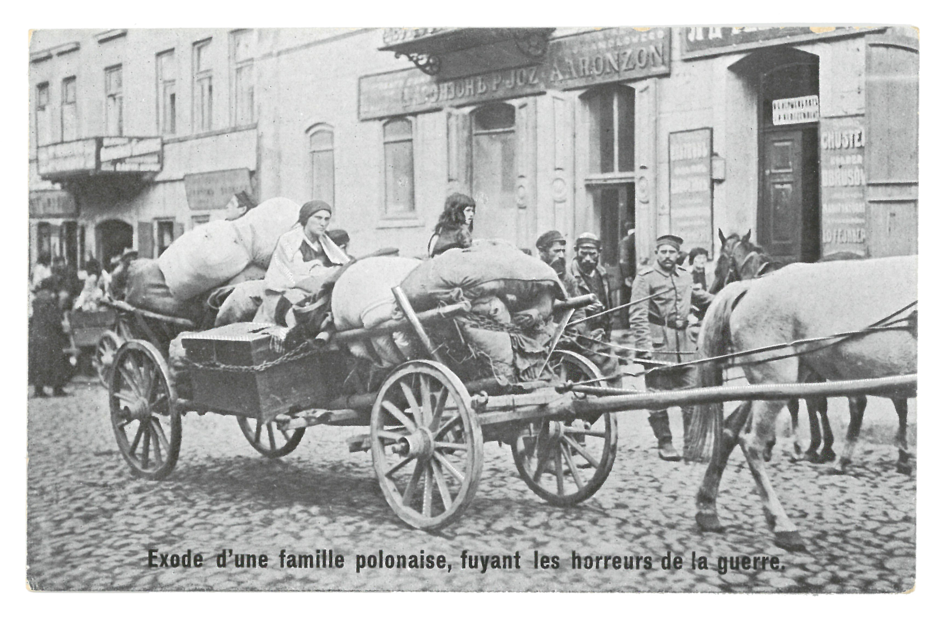


This Discovery section focuses on illustrating Jewish life through postcards. Most of the cards displayed on We Were There Too are particularly rare since the Jewish communities frequently illustrated were decimated during the First and Second World Wars.
At the beginning of the 20th century, there was of course no television, radio, telephone or internet or many of the other things we take for granted today. Most communication was by letter. In the 1890’s postcards were introduced and often the message and the image were on one side with the reverse side entirely for an address. In 1907, postcard companies began introducing cards with an image filling one side and the message and address on the reverse side. This meant that the photographic images could be larger.
With the expanding railway systems there was rapid delivery between cities and towns and within them. Postcard companies began producing cards in very great quantities, with a whole range of images that could be sent through the postal system very quickly and cheaply.
When a traveller visited a place in Eastern Europe they would have their photograph taken, perhaps with family members from that country. The printer who developed the image, would provide postcard size versions of it. Postcard publishing became a significant industry and collecting grew to become a major hobby.
During the First World War, all armies had photographers accompanying them and there are a large number of cards depicting nearly all the activities of the period.
It should be remembered that during war years, the messages were frequently censored. Frequently the postmark is of an field station, or a field hospital at some indeterminate point.