Timeline
Scroll through the events that shaped the First World War with our detailed timeline. Listed are the main events and turning points of the war, as well as dates significant to Jewish lives and their involvement in the war effort.

Scroll through the events that shaped the First World War with our detailed timeline. Listed are the main events and turning points of the war, as well as dates significant to Jewish lives and their involvement in the war effort.

Thousands of young Jewish men, chiefly from the settled, middle-class community, enlist amidst a surge of patriotism in the first months of the war. The Anglo-Jewish leadership is keen to demonstrate the community’s loyalty to Britain, and the Jewish press loudly proclaims its support for the war effort.

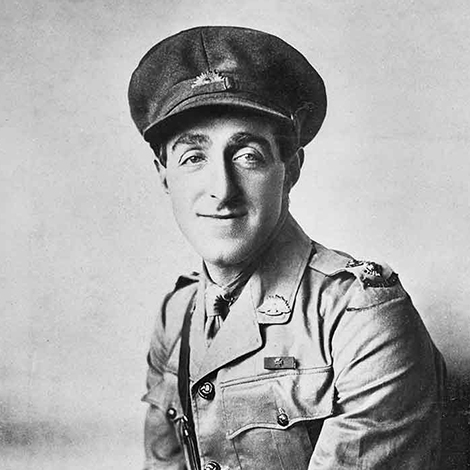
Lieutenant Frank de Pass, the son of a wealthy Sephardi family in Chelsea, becomes the first Jewish soldier to win a Victoria Cross. Under heavy enemy fire, he captures a German trench and carries a wounded comrade back to safety. He is killed the next day.
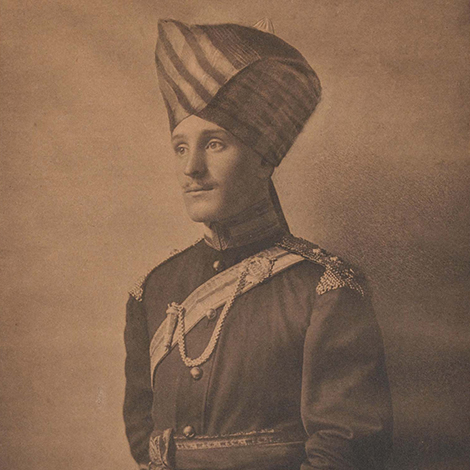
Rev. Michael Adler, formerly the minister at the Central Synagogue in London, persuades the Army that a Jewish chaplain is needed at the front and is posted to France. For the next three years he travels along the lines with an Ark and a Torah scroll in his car; conducting services, visiting Jewish soldiers, lobbying the military authorities, and keeping a record of the Jewish dead.

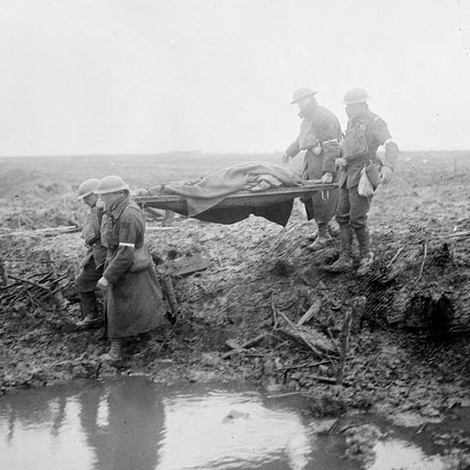
Acting Corporal Issy Smith (born Ishroulch Shmeilowitz) wins the Victoria Cross for his bravery during the Second Battle of Ypres. Acting on his own initiative, Smith recovers wounded soldiers while exposed to sustained fire and attends to them ‘with the greatest devotion to duty regardless of personal risk’.

A German U-boat sinks the passenger liner Lusitania off the coast of Ireland with the loss of over 1,200 lives. This unprecedented attack on civilians fuels the British public’s growing animosity towards Germans and all things foreign.
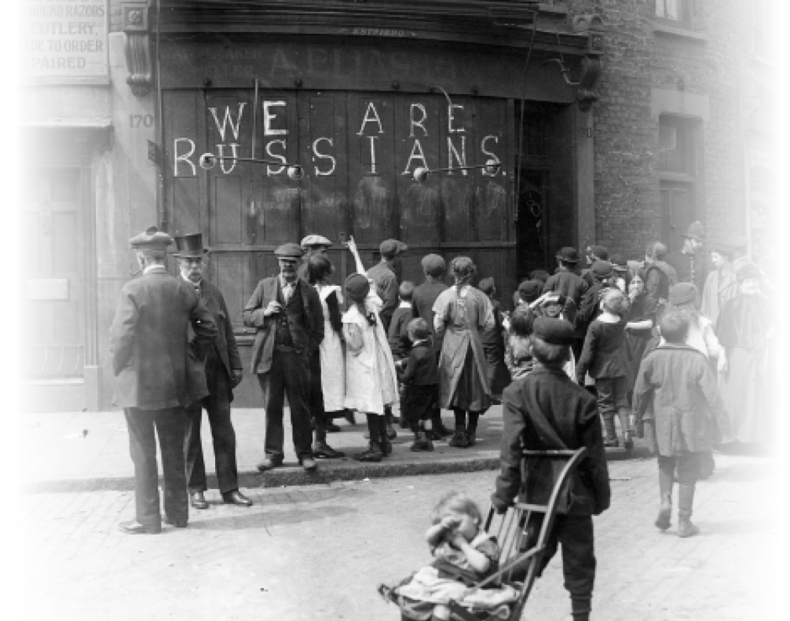
Anti-German riots erupt in London and Liverpool. Jews and Jewish businesses are also attacked due to their foreign origins and German-sounding names. Some try to avert hostility by putting up signs saying ‘We are Russians’.

In a heavily-bombed trench at Gallipoli, Lieutenant Leonard Keysor catches Turkish explosives and throws them back at the enemy for 50 hours straight. He is wounded twice but refuses medical attention.
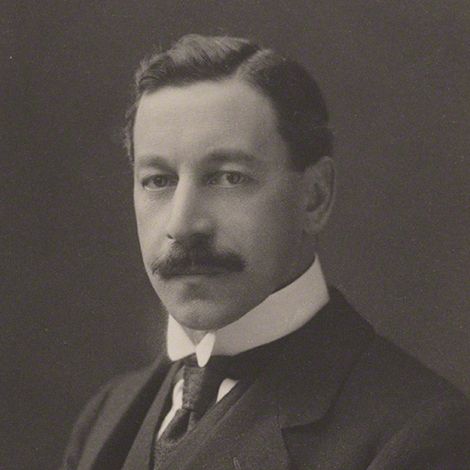
A committee of prominent Anglo-Jewish leaders, chaired by Edmund Sebag-Montefiore and Lionel de Rothschild, is formed to help the military authorities in promoting enlistment amongst the immigrant Jewish community. Later in the war they turn their attention to advising the War Office on religious, cultural and welfare issues, and change their name to the Jewish War Services Committee.
Herbert Samuel, a member of a prominent and wealthy Anglo-Jewish family, is appointed as Home Secretary by the Liberal Prime Minister, Herbert Henry Asquith. Though not religiously observant, he is the first Jew to serve as a British Cabinet minister.
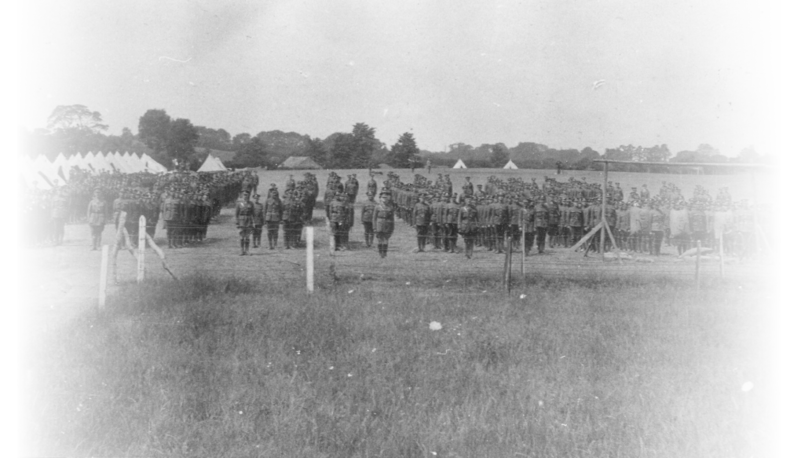
The initial surge of recruits for Britain’s volunteer army has slowed, and conscription is introduced.
Conscription highlights the distinction between those Jews who have British citizenship and those who are immigrants and have not been naturalised. Only British citizens are subject to conscription. Allied subjects living in Britain are invited to enlist as volunteers from May 1916, but few of the Russian Jewish immigrants take up the offer. The large number of apparent ‘shirkers’ in the East End and other Jewish areas fuels increasing public resentment against the community.
The government is worried that resentment against immigrant Jews who are not in uniform will lead to civil unrest. The Home Secretary, Herbert Samuel, announces that Russians of military age settled in Britain will be required either to enlist in the British Army or return to Russia to serve there.
There is an immediate storm of protest in the immigrant community, especially amongst those on the political left. Many object that they are not British; they were persecuted by Russia, and they came here seeking asylum. However, the Anglo-Jewish leadership and press are firmly on the government’s side.
‘There are a considerable number of subjects of the Allied Governments living in the country who are of military age… there has been a growing feeling in the country that these men ought either to serve in the Army of the country of their birth, or in the Army of the country of their adoption.’
Herbert Samuel in the House of Commons, 29 June 1916
‘We came here counting upon safety – and now it is proposed to carry us forcibly back to Russia from which we escaped, unless we submit to the act of brutality demanding from us that we should enter the British army.’
The Committee of Delegates of Russian Socialist Groups in London, July 1916
Asquith resigns as Prime Minister and Samuel follows out of loyalty, despite being invited to continue as Home Secretary by the new Prime Minister, David Lloyd George.
Tsarism collapses and Nicholas II abdicates following a massive popular uprising in Russia. The East End rapturously celebrates the overthrow of the anti-Semitic regime from which many of Britain’s Jewish immigrants had fled. The Revolution is seen as the dawn of a new era for humanity in general and the Russian Jew in particular.
A reciprocal agreement is concluded between Britain and the post-revolutionary Russian government whereby each can conscript the other’s nationals who are resident in their country. Though there are few Britons living in Russia, there are an estimated 25-30,000 Russians of military age in Britain, most of them Jewish.
Russian immigrants must now register for repatriation to Russia or become liable for conscription in the British army. Starting in August, about 2,000 Russian Jewish men depart for Russia. Their families are not allowed to accompany them, and many are never heard from again. Conscription of the remaining Russians in Britain begins.
To encourage the enlistment of the Russian Jewish immigrants, the British government announces the formation of a specifically Jewish unit to fight against the Turks in Palestine. About 1,500 Russian Jews join.
This step has long been urged by Zionists including Vladimir Jabotinsky, but some Anglo-Jewish leaders have opposed it on the grounds that Jews should fight alongside their fellow Britons rather than setting themselves apart.
The Jewish units are designated as the 38th, 39th and 40th battalions of the Royal Fusiliers, later known as the Judeans. The preponderance of East End tailors also earns them the nickname ‘the King’s own Schneiders’.

An argument over enlistment between a wounded soldier and a Russian Jewish immigrant escalates over two days into a general disturbance involving 5,000 people. Stones and insults are thrown, but only one arrest is made. The government insists it is merely a street brawl, not a pogrom as claimed by the German press.
Russia’s new government is overthrown by Lenin and the Bolsheviks, who have no interest in the forced repatriation of immigrant Russian Jews from Britain. They repudiate the Anglo-Russian Military Service Agreement, and then withdraw from the war altogether in March 1918.
The British government decides to retain those immigrants who have already enlisted in the British army, and to continue with immigrant conscription for service in the non-combatant labour battalions only. About 5,000 Russian Jews serve in the labour battalions.
The Foreign Secretary, Arthur Balfour, writes a letter to Lord Rothschild which publicly states the British government’s support for a Jewish homeland in Palestine.
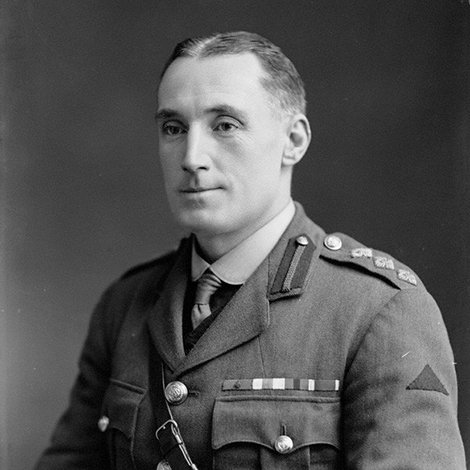
At Masnières in France, brigade headquarters and an ammunition dump are captured by the enemy. Captain Robert Gee escapes and leads his comrades in a counter-attack. He establishes a defensive flank and then, finding that an enemy machine gun is still in action, goes forward with a revolver in each hand and captures it, killing eight of the crew. He refuses to have his wounds dressed until the defence is organised.
Jerusalem surrenders to the approaching British forces after they overcome the Ottoman troops in the region. Two days later, General Allenby shows his respect for the holy city by dismounting from his horse at the Jaffa Gate and entering on foot.
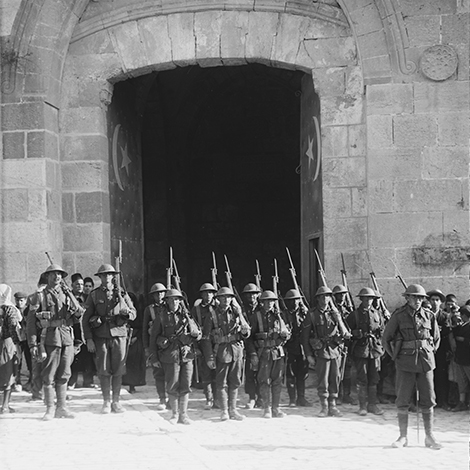
The Jewish battalion has completed its training at Plymouth. It parades through cheering crowds in the City of London and the East End, preceded by the band of the Coldstream Guards, and gives the salute to the Lord Mayor of London. The battalion is blessed by the Chief Rabbi and fêted by the community. It embarks for Palestine the following day.

The poet and artist Isaac Rosenberg was born to immigrant Jewish parents and lived most of his life in the East End. Although not a supporter of the war, he enlists in October 1915 to support his mother financially. He is killed in action at Arras in 1918.
Rosenberg’s poetry is considered amongst the finest produced during the war. Some of his poems employ Biblical imagery, implicitly linking the destruction of the Temple to the devastation wrought by the war.
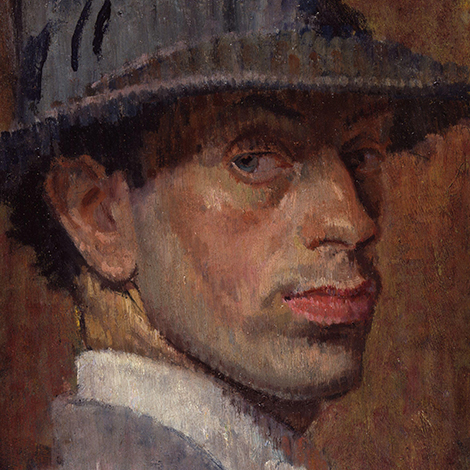
The Judeans are deployed in the Jordan valley, where they carry out patrols for reconnaissance and intelligence. Two men are awarded the Military Medal for their bravery during an enemy ambush. In just a few weeks, 80% come down with malaria.
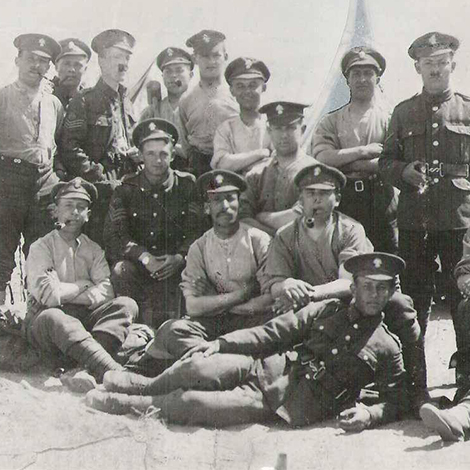
The Judeans fight in the Battle of Megiddo, one of the final and most decisive victories of the Palestine campaign. Eleven medals are earned for gallantry and six men are killed in action.
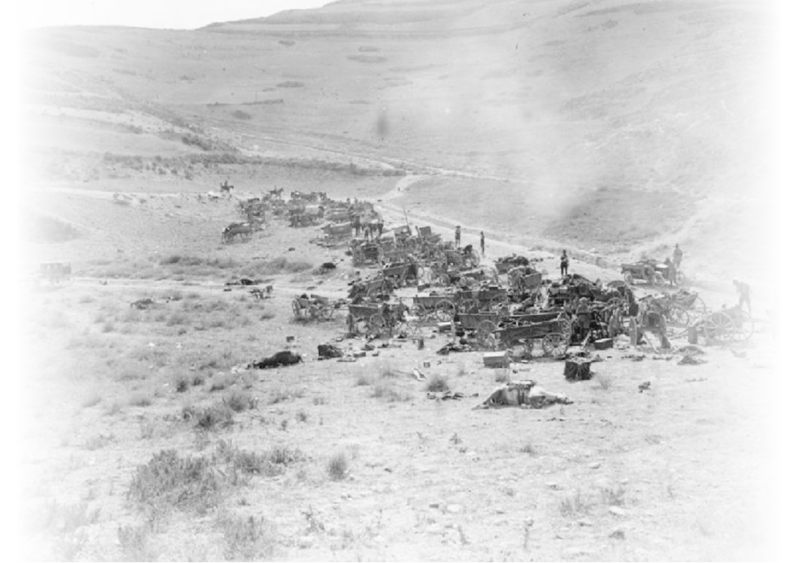
The Armistice is signed, bringing the war to an end. An estimated 41,500 British Jews have fought for King and country and over 2,300 have given their lives. Five have received the Victoria Cross, the highest award for bravery in the British armed forces.


Follow us on social media:


© London Jewish Cultural Centre 2018
Documenting & commemorating the contribution British Jews made during the First World War.