Hertha Ayrton
Born:
30 Nisan 5614 (28 April 1854)
Died:
14 Elul 5683 (26 August 1923)
Basic Information
Other first name:
Phoebe Sarah
Birth
Date of birth:
30 Nisan 5614 (28 April 1854)
Place of birth:
Portsea, Hampshire
Death
Date of death:
14 Elul 5683 (26 August 1923)
Cause of death:
Blood poisoning from an insect bite
1 of 2
Hertha
Her birth name was Phoebe Sarah Marks, but she adopted the name Hertha in her teens after the heroine of a poem by Algernon Charles Swinburne.
2 of 2
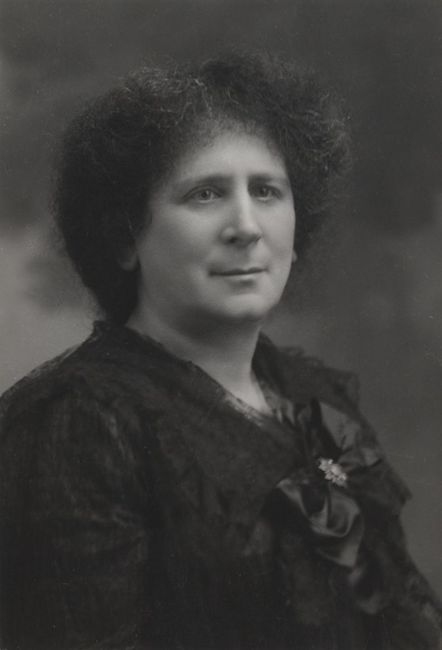
Portrait of Hertha at Girton College
1 of 2
Hertha
Her birth name was Phoebe Sarah Marks, but she adopted the name Hertha in her teens after the heroine of a poem by Algernon Charles Swinburne.
2 of 2
Portrait of Hertha at Girton College
Places
Addresses
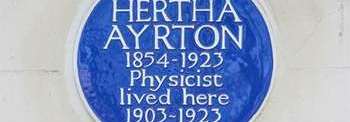
41 Norfolk Square Paddington London
Schools
Name:
Girton College, Cambridge
Name:
Finsbury Technical College
Other Organisations
Name:
International Federation of University Women
Significance:
One of the founders
Name:
The National Union of Scientific Workers
Significance:
One of the founders
Inventions and Famous Scientist Friends
The Electric Arc – in the mid to late 1890s the arc lamp to light the streets hissed a lot and often cut out meaning it worked inconsistently. Hertha discovered a way for things to flow more effectively by excluding air from the arc. Although she was the first woman to read a paper to the Royal Society in 1904, she was refused election to its membership. In 1906, she was awarded a Hughes Medal for her work on the arc and ripple movements in sand – it was another 102 years before a woman won the medal again. In 1911, Hertha visited Pairs and made friends with Marie Curie whom she sheltered at her home after Curie’s affair with another scientist. Einstein wrote to Curie in admiration of Hertha.
Women's Suffrage Movement
Ayrton was a noted supporter of women’s rights and of the suffragettes in particular. Her most significant role came during the operation of the notorious ‘Cat and Mouse’ Act of 1913, under which suffragette prisoners on hunger strike were released, only to be incarcerated again when they had sufficiently recovered. Some of the hunger strikers, including Emmeline Pankhurst, were cared for at her Norfolk Square home in 1913. During one of Mrs Pankhurst’s recuperative stays, Hertha wrote that:
"There are two or more detectives in front, two at the back, one at least on the roof of the nearest empty house; and a taxi waiting to pursue, if Mrs P. should get up and run away!"
Hertha often wrote to the Times including a letter to the editor entitled ‘Woman Suffrage’ (7 Feb 1907) and was friends with campaigners Louisa Goldsmid and Barbara Bodichon (Hastings). Hertha’s daughter Barbara Ayrton Gould (named after Bodichon) was a suffragette who spoke at WSPU offices in Hastings and was arrested in London for her activities in 1912.
Jewish Faith
In her obituary in the Jewish Chronicle, it said that she identified as agnostic throughout her life, but: “She never lost an opportunity of expressing pride in her Jewish descent and for year after year” and “made a point of going home for Passover”.
(Research by Shalom Sussex - see http://shalomsussex.co.uk/research/hertha-ayrton/)
Family
Spouse
Children
Barbara Ayrton Gould (female)
Parents
Father: Levi Marks (male)
Mother: Alice Teresa Moss (female)
Homefront
Occupation:
Physicist, Inventor and Suffragette
What was the impact of this:
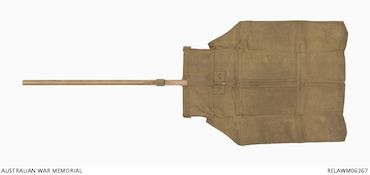
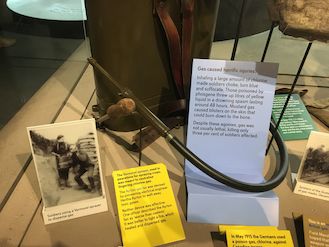
During WW1 Hertha invented the Ayrton Fan or flapper, used in the trenches in the First World War to dispel poison and foul gas. From 1916 onwards 104,000 devices were supplied to troops but in 1920, Hertha wrote an article in The Times about the bureaucratic delays in sending them to the front.
Feedback from soldiers about the fan was not positive. It was considered by them as somewhat of a controversial offering. Many found it ineffective. Major General CH Foulkes commander of Special Brigade responsible for British Gas operations described it as “Worse than useless”. According to some, the Ayrton Fan was issued to soldiers on the front due to Hertha Ayrton’s powerful friends. She was very well connected. Despite this the Ayrton Fan remained in service (in decreasing numbers) until 1918. Some thought it ‘far better to light a fire which heated and dispersed gas’.
Gallery
1 of 2
Girton College Fire Brigade 1878 featuring Hertha Ayrton
© The Mistress and Fellows, Girton College, Cambridge
2 of 2
Description of militant suffragette Barbara Ayrton, Hertha's daughter
1 of 2
Girton College Fire Brigade 1878 featuring Hertha Ayrton
© The Mistress and Fellows, Girton College, Cambridge
2 of 2
Description of militant suffragette Barbara Ayrton, Hertha's daughter