Give us your feedback
Please tell us what you think to help us develop and progress this vital resource
The key to the British Army’s success in defeating the Turkish army in 1917–1918 was due in part to their control of malaria in Palestine. According to the World Health Organisation (WHO), there were still in 2018 an estimated 228 million cases of malaria worldwide, with an estimated 405,000 malaria deaths for that year.
A century ago, Palestine was notoriously malarious, rendering much of the country either uninhabitable or sparsely populated.[1] Palestine was a part of the Ottoman Empire for several centuries (Figure 1). In 1915 the Turkish Army in Palestine attacked British positions on the Suez Canal, Egypt, but were repulsed by the British defenders. The following year the British Army invaded Palestine from Egypt, and General Edmund Allenby, an English officer, led the British Army’s Egyptian Expeditionary Force against the Turkish Army in the successful conquest of Palestine in 1917–1918.
During 1917, Allenby had fought his way northward against the Turkish army and had just captured Jerusalem in December 1917. His army’s lines of supply were becoming over-extended and he needed to pause whilst he regrouped over the following few months, but he then found himself in ‘one of the most highly malarious countries in the world’.[2] Consideration was accordingly given for withdrawal of his army on this account, but Allenby instead decided to remain where he was, and to take immediate and effective action to protect his troops against the disease. Had Allenby failed to protect his troops, it was later commented, his army would have ‘completely melted away’.[3]
In 1897, Major Ronald Ross established that malaria was transmitted by anopheline mosquitoes.[4] The first successful project which involved malaria management and a reduction in rate of infection was the construction of the Panama Canal in 1904. The project was directed by United States Army Surgeon Major W.C. Gorgas who set out to test the effectiveness of the Ross mosquito theory in the Canal Zone in a large-scale elimination campaign with thousands of men in ‘mosquito brigades’ working year-long to tackle the mosquito population. He reduced the numbers of malarial mosquitoes by window screening the barracks, mandatory prophylactic use of quinine and clearing wide areas of vegetation, draining swamps, ditching, oiling, and the use of insecticides on standing water all along or near the proposed route of the canal. These efforts greatly reduced malaria incidence, and also greatly increased American chances of canal-building success. Yet malaria continued to challenge,
albeit to a much lesser degree during the entire construction programme. Because malaria management was still in its infancy, effective management methods still had to be developed. The work was carried out in a somewhat haphazard manner.
The second major project concerning malarial control involved protecting the British Army against malaria in Palestine. A seemingly-inspired Allenby realised he had to deal with destruction of the mosquito breeding sites in a more precise or targeted fashion than the broad-brush method which had been employed by Gorgas at the Panama Canal, and Allenby chose an entomologist for this purpose. Accordingly, for six months before the final decisive battle against the Turkish Army in September 1918, anti-malaria works were initiated by Allenby and his entomologist, Major E.E. Austen, to create a ‘healthy’ area for his army and protect his troops in a limited area during the campaign.[1]
When planning tactics for his final battle against the Turkish Army, Allenby calculated that he could reasonably count on the British Army lasting no more than ten days after being bitten by infected mosquitoes once his cavalry had crossed the front line, moving northward from the treated British ‘healthy’ area into the malarious area occupied by the Turkish Army.
Allenby’s cavalry was ordered to cross the front line and attack on 19 September, and in accordance with his calculations, the British Army began to collapse from malaria on 30 September, but, fortunately for Allenby, only after first having decisively defeated the Turkish army during the previous ten days. Reported, years later about the Palestine campaign, “… a force of 40,500 men … lost 20,427 men almost entirely from malaria [772 killed and wounded, 19,655 debilitated from malaria]”.[2]
Suffice it to say that failure to contain malaria would have, in all probability, resulted in failure to defeat the Turkish Army. Of the 100,000 Turkish prisoners-of-war, more than 20,000 had to be ad-mitted to hospital, presumably with malaria as “a very large proportion of the prisoners taken in the firing-line were weak and anaemic as a result of malaria infection”.[3] It is important to appreciate Austen sought merely to control the disease, and the major part of his anti-malaria works involving sometime thousands of Allenby’s troops ceased after Allenby’s final advance began. As the works were not maintained after the advance, malaria returned within weeks. Successful malaria management directed by the entomologist Austen in 1918 made possible the Turkish Army defeat.
Extensive boundary areas of the Middle East were thereafter changed to reflect the division of the former Ottoman Empire (Figure 2). Had Allenby's army 'melted' away due to malaria, history may have shown a different face to the region. These boundary changes were traceable to entomologist Austen’s contribution that enabled the military victory of General Allenby.
Modern Political Zionism, the movement for Jewish self-determination, arose in the late 19th century as a reaction to anti-Semitic and exclusionary nationalist movements in Europe. Anti-Jewish pogroms in Russia (1881–1884) stimulated growth of Zionism, resulting in formation of pioneering organisations and the first major wave of Jewish immigration to Palestine. Between 1882 and 1914, approximately 75,000 Eastern European Jewish idealists arrived to settle in Palestine, but by 1914, about half this number had died or had left, unable to cope with the severe malarial conditions. After 19th September 1918, when Allenby began his cavalry charge, the anti-malaria work directed by Austen ceased. Anopheline mosquitoes returned and were again abundant in many formerly ‘healthy’ areas in Palestine. Palestine reverted to its former ‘pre-Allenby/Austen’ state, rendering much of the country again either uninhabitable or sparsely populated.
The Mandate for Palestine was a League of Nations mandate of the territories of Palestine and Trans-Jordan, both of which had been conceded by the Ottoman Empire following WWI. After the 1918 defeat of the Turkish Army by the British Army, the Palestine Mandate, on behalf of the League of Nations, was assigned to the United Kingdom, and operated from 1920 to 1948 by a British civil administration.
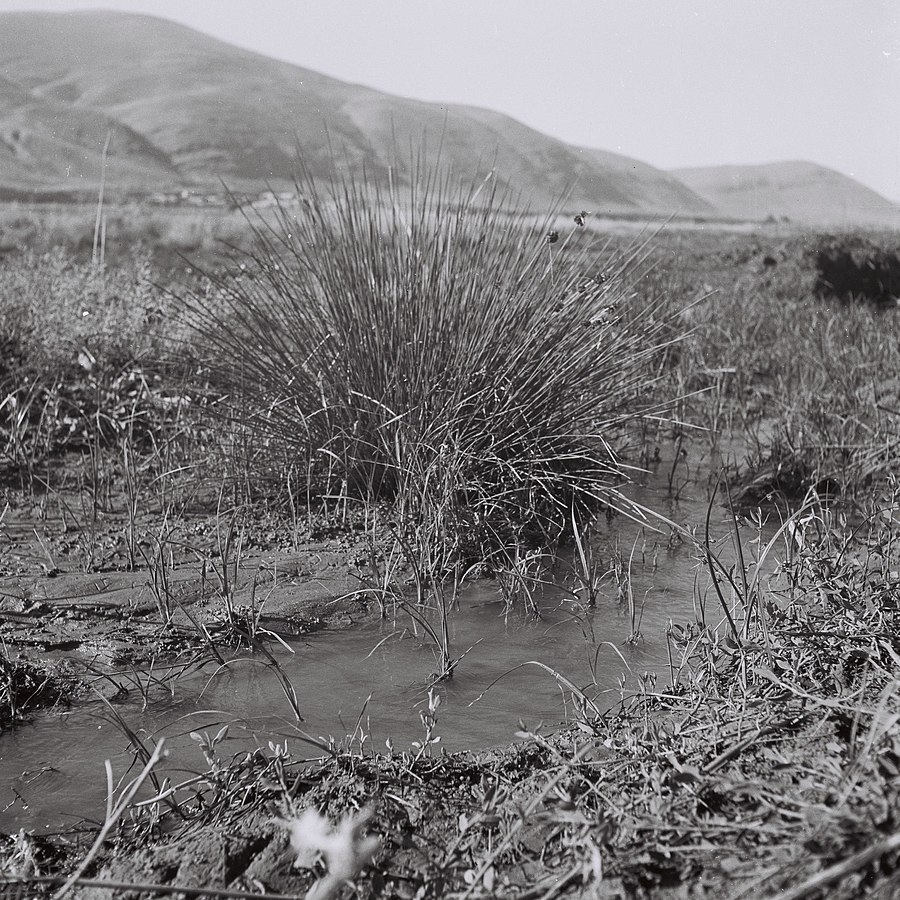
From 1910 onwards, nearly all lands sold to Jews wishing to settle in Palestine, both before and during the British Mandate period, were located in sparsely populated or uninhabitable, highly malarious areas of the coastal region and the valleys of Palestine. In 1923 this land was described by the Palestine Department of Health, ‘In … the Valley of Jezreel, from Merchavia to Beisan … in previous years, there have been severe epidemics of malignant malaria among the newly settled colonists … [and while there is] … much well-watered and fertile land, [it is] at present lying waste on account of malaria …’[1]
In 1920, a map of malaria severity in Palestine was drawn (Figure 3) by the British Mandate Department of Health.[2] This map designated the worst areas (dark blue; spleen rates ranging from 50-100%), highly malarious, and the Department of Health even declared some of these areas as uninhabitable. The 1921 Annual Report of the British Mandate’s Department of Health starkly noted that: ‘Malaria stands out as by far the most important disease in Palestine. For centuries it has decimated the population … an effective bar to the development and settlement of large tracts of fertile lands … it assumes epidemic characters in certain areas wiping out the populations of whole villages in a few months’ time … few regions in the country are actually free from it’ [3]
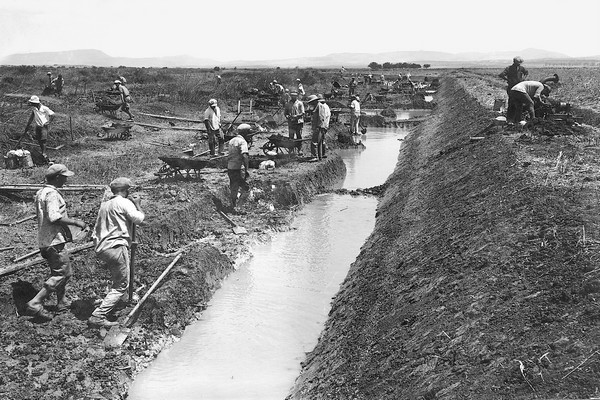
In 1920, Dr. Israel Kligler, an American public health scientist, and an idealistic Zionist Jew, arrived to settle in Palestine, and during 1921– 1922, he began what initially was a malaria vector management campaign that was to become the first start anywhere in the world of a successful national malaria-elimination campaign. He realised education was as important as the anti-malaria work itself because unless the population at risk appreciated the ongoing need for vigilance and maintenance malaria would return and the original destruction of the mosquito breeding sites would be of little value.[4] Kligler relied on Arab and Jewish co-operation of entire communities— men, women, and children—to assist in the anti-malaria work. This co-operation remained strong, despite attempts to break it by those who opposed it. It was important to him that everyone felt involved. The cooperation endured, and in 1967 the World Health Organization eventually declared malaria eliminated in Israel.
Kligler’s success in malaria elimination in Palestine was so striking that in 1941 the British Mandate reported: ‘In a number of areas where intense endemic malaria had resulted in no population for generations, recent [antimalarial] schemes have created large tracts of cultivatable land’ and ‘… very large areas of what is recognised by all as some of the most fertile land in the country have been re-claimed, after centuries of waste’. Many large tracts which until recently meant nothing but death to those venturing into them, have now been reduced into rich and fertile land free from all danger to health’. [5]
The 1947 United Nations Partition plan for Palestine (Figure 5), reflected areas where principally the Jews lived and separately where the Arabs lived. While the Jews accepted the UN Resolution adopting the Plan, the Arabs rejected it which resulted in the 1948 Arab-Israeli War. The Armistice Lines of 1949 (Figure 6) accordingly reflected a similar shape and pattern to that of the UN Partition Plan, reflecting in turn the ‘dark blue’ malarious areas of the Palestine Department of Health 1920 Map (Figure 3), such 'dark blue' areas including almost the only land that had been available for Jews to purchase. Here revealed is an unanticipated consequence of successful malaria management by an entomologist
In the 19th century, when Jews began to immigrate to Palestine, then under Ottoman Empire rule, malaria was accepted as a debilitating and, at times, rapidly fatal disease. The Ottoman Empire’s rule over the Middle East ended in 1918 which led to the creation of new spheres of influence and new countries in the region. These changes in the maps took place following the defeat of the Turkish army by Allenby, which can be traced back to the vital contribution of Austen, the entomologist. General Allenby had correctly identified malaria control as a priority at the onset of the Palestine campaign, but it was Major Austen, the entomologist, who enabled him to succeed. The State of Israel was declared as shown on the map of the 1949 Armistice Lines (Figure 5). Boundaries on this map to a great extent reflected the concentration of Jews in formerly highly malarious areas in Palestine. Such concentration of Jews in these areas would have been unthinkable when Kligler first began his anti-malaria campaign in 1921/22. Accordingly, the map of the Armistice Lines may be linked with Dr. Kligler, whose entomological experience made possible this unanticipated consequence.
[1] See Cook T and Son: Cook’s Tourists’ Handbook for Pa-lestine and Syria, 1876. Simpkin, Marshall & Co. London. (Collection of Harvard University) and Twain M: The Innocents Abroad, 1869 Chapter XLIX (49). http://www.gutenberg.org/files/3176/3176- h/3176-h.htm (accessed 29 August 2019).
[2] Austen EE: Anti-mosquito measures in Palestine dur-ing the campaigns of 1917-1918. Trans. R. Soc. Trop. Med. Hyg. 1919, 13:47-60. https://doi.org/10.1016/ S0035-9203(19)80006-8
[3] Fowler CEP: Malaria in Palestine. A summary of anti-malarial work carried out with the 54th Division in the Mulebbis Area, April to June 1918. J. R. Army Med. Corps. 1926, 46:241-248.
[4] Ross R: Life-History of the Parasites of Malaria. Na-ture 1899, 60:322–324. https://doi.org/ 10.1038/060322a0
[5] Luce R: War Experiences of a Territorial Medical Officer. Chapter XXIII-Malaria Campaign. J. R. Army Med. Corps.1937, 68:407-414.
[6] Barrett J: The Halford Oration. Med. J. Aust. 1932, 24:707-718. https://doi.org/10.5694/ j.1326-5377.1932.tb90107.x
[7] Evans W: Anti-Malarial work with the Australian Mounted division in Palestine. Med. J. Aust. 1919, 3:526-529.
[8] Palestine Department of Health: Annual Report for the year 1923. Palestine Government, Jerusalem, 1923, page 24.
[9] Palestine Department of Health: A review of the control of malaria in Palestine (1918–1941). Gov-ernment Printing Press, Jerusalem, 1941.
[10] Palestine Department of Health: Annual Report of the Department of Health for the year 1921. Pa-lestine Government. New Jerusalem Press.1921, page 48.
[11] Kligler IJ: The epidemiology and control of malaria in Palestine. University of Chicago Press. Chicago, Illinois, 1930.
[12] Palestine Department of Health: A review of the control of malaria in Palestine (1918–1941). Government Printing Press, Jerusalem, 1941.




Follow us on social media:


© London Jewish Cultural Centre 2018
Documenting & commemorating the contribution British Jews made during the First World War.