by Natasha Lehrer
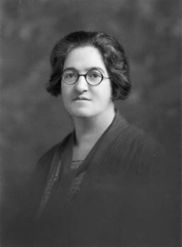
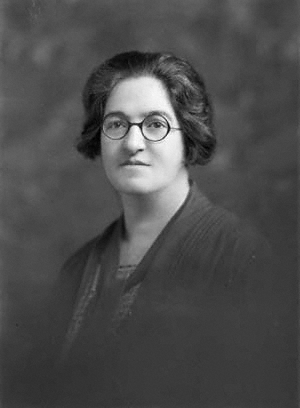
Marion Phillips, who, as Chief Women’s Officer of the Labour Party was one of the most important figures in the campaign to free women from domestic drudgery at the beginning of the twentieth century and whose campaigning work brought a quarter of a million women into the Labour Party, was born on October 29, 1881 in St. Kilda, Melbourne, Australia. She was the youngest of seven children—she had three brothers and three sisters—of Philip David Phillips, a Jewish Australian lawyer, and Rose Asher, born in New Zealand. Her paternal grandfather Solomon Phillips had emigrated from London in 1832 with his wife Caroline and set up business.
The Phillips family was liberal and cultured. Together with her three sisters, Charlotte, Rosetta and Adele, Marion was sent to the Presbyterian Ladies College, from where she went on to Melbourne University. There she was a prize-winning student, gaining a first class degree in History. In 1904 she won a special scholarship in Economics and History at the London School of Economics, where from 1904–1907 she worked on her doctorate on the development of New South Wales, which she published in 1909 as A Colonial Autocracy.
It was whilst she was at the LSE, through her supervisor Graham Wallas, a prominent member of the Fabian Society, that Phillips first met Sydney and Beatrice Webb in 1906. She began working for Mrs Webb as a research assistant as part of the Royal Commission of Enquiry into the working of the Poor Laws. Phillips was living with her married sister Charlotte at this time, but they clashed politically and in 1909 she decided to move into the Holland Park house of a fellow researcher, Dr Ethel Bentham, along with another researcher Mary Longman, whom she had met during this research project.
In 1907 Phillips joined the Independent Labour Party, founded by Keir Hardie. This was a highly idealistic movement, which believed in a form of non-Marxist socialism and whose members were as concerned with employment conditions as with spiritual and intellectual needs. Members were vegetarian and practiced keep fit and preventative medicine. At around the same time Phillips joined the Fabian Society and a year later joined the Women’s Labour League, whose function was to inform, educate and promote discussion of the political issues concerning women through both the written and the spoken word.
This was the beginning of Phillips’s career as a pioneering reformer; in 1909 she became a member of the executive of the Women’s Labour League; in 1910 she became secretary of the National Union of Suffrage Societies; in 1911 she became Secretary of the National Federation of Women Workers. In 1912 she became General Secretary of the Women’s Labour League and until her death was editor of the “League Leaflet” (from 1913 it was called Labour Woman).
A prime motivation was the desire to see working class children being given both the protection and the opportunities that she herself had received during her happy middle-class childhood in Australia. She campaigned tirelessly for “open air education,” which took place in specially designed schools where children were constantly exposed to daylight and air. She also fought for better medical inspection and treatment of school children and through the League Leaflet she encouraged women to join the Trade Unions.
As the editor of the manual How to do the Work of the League, published in 1914, she began what was to be her most influential campaign, which was to encourage all women—working women, non wage-earners who could not join trade unions, those women who would not have considered themselves socialists but who were broadly sympathetic to the Labour Party—to join the Labour Party. In 1917 Phillips became secretary of the Standing Joint Committee of Industrial Women’s Organizations, which drew together women in trade unions, the co-operative movement, and the Women’s Labour League, whose branches became the core of the Labour Party’s branch women’s sections. She furthered the training of women as speakers by encouraging the discussion of topics close to the hearts of League members.
In 1918 Phillips, who was called “probably the most important and most talented [woman] in the Party,” was elected the first Chief Women’s Officer of the Labour Party. In spite of her pioneering work for women, she appears to have inspired strong dislike amongst other leading women in the Labour Party, with her abrasive, chilly manner and her tireless rising through the ranks of the Party; according to the diary of Beatrice Webb, Phillips was “much disliked by the other leading women of the labour movement.”
In addition to her tireless committee and political work, Phillips continued to write her proto-feminist manuals. In 1918 she published The Working Women’s House, in which, with clairvoyant prescience, she advocated the establishment of take-away restaurants, launderettes and municipally-run systems of home help. However class considerations always won over the more philosophical issues of gender, and throughout her career Phillips was always more interested in alleviating the working class woman’s domestic experience than in carrying forward the ideological issues of feminism. For example, she opposed committing the Labour Party to supporting birth control in the 1920s for fear of alienating the Catholic and working class constituency of Labour Party supporters.
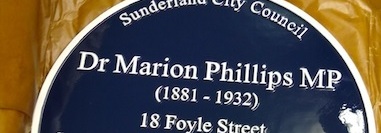
With a Unionist colleague she was elected Labour MP in 1929 for the double-member constituency of Sunderland—the first Australian woman to win a seat in any national parliament. She was apparently idolised in her constituency, speaking up for paid holidays and supporting free trade for Sunderland shipbuilders. Nonetheless she lost the seat in the 1931 general election.
Never married, Phillips died on January 23, 1932, in London, of stomach cancer. An atheist, she was cremated in Golders Green crematorium.


Give us your feedback
Please tell us what you think to help us develop and progress this vital resource