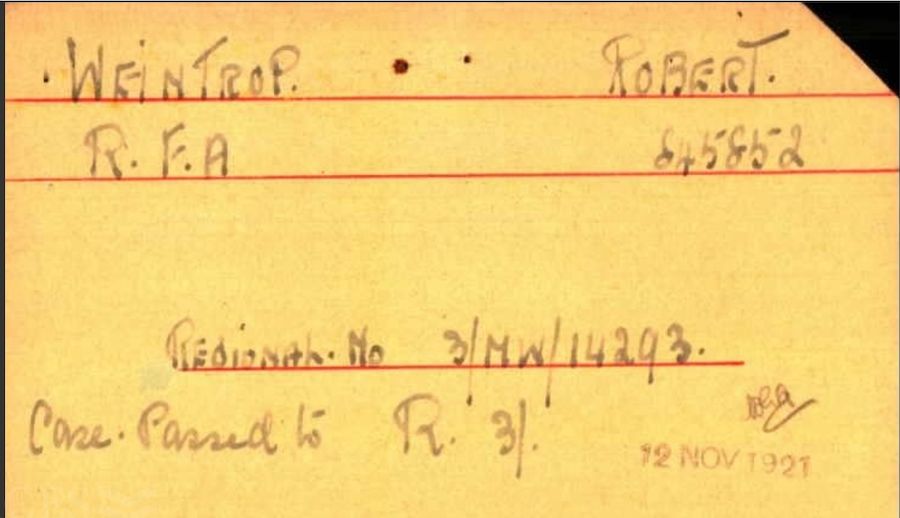
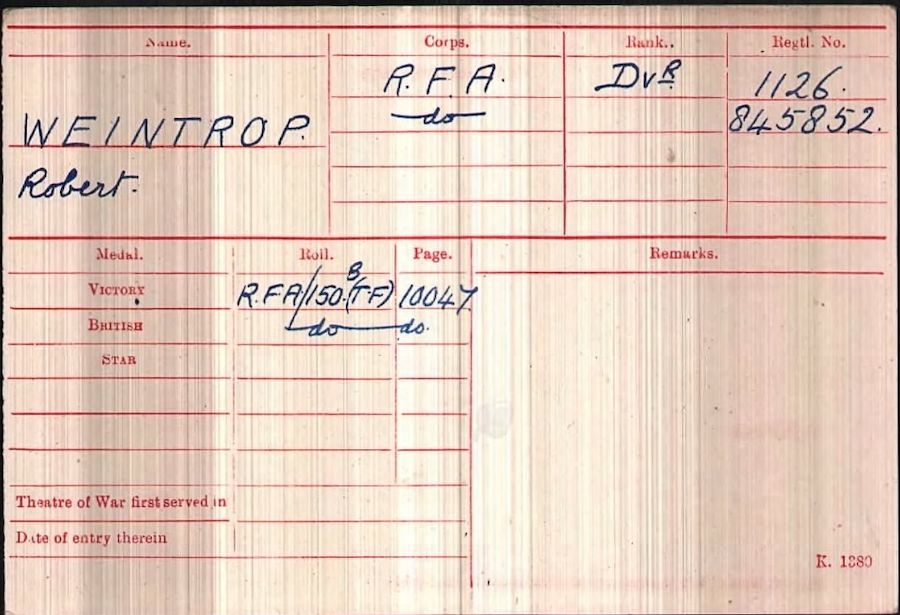
Jewish Chronicle - Bud Flanagan , 23 October 1968
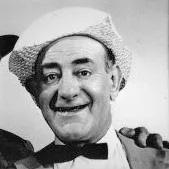
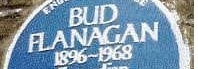
Chaim Reuven Weintrop or Robet Winthrop or Bud Flanagan,who died at Kingston, Surrey, on Sunday aged 72 was as typically Cockney as a barrow-boy, as typically Jewish as a character from a Zangwill story.
Born in Hanbury Street, in Spitalfields, one of nine children of Polish immigrants, he was brought up in the rich, roughlife ofthe pre-1914 East End. He went to the Jews' Free School, joined the Brady Street Boys' Club and as the club's most famed product was in later years proud to organise a concert at the Coliseum which raised several thousand pounds for its funds.
While he was still at school he became a call-boy at the local Cambridge Theatre and at the age of 14 he ran away to America, where he worked as a messengeer, sold newspapers, went harvesting and eventually got bookings as a knock-about comic in small halls all over the States.
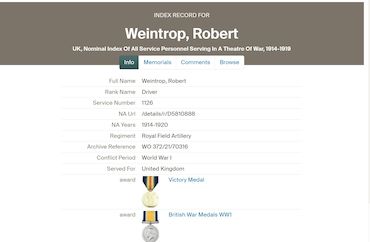
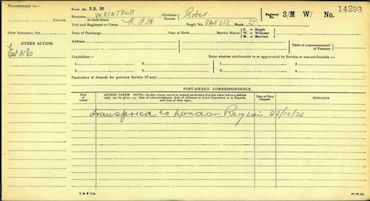
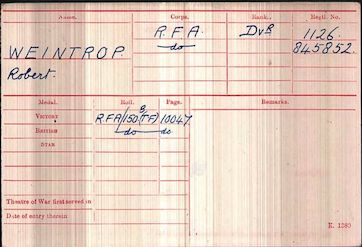
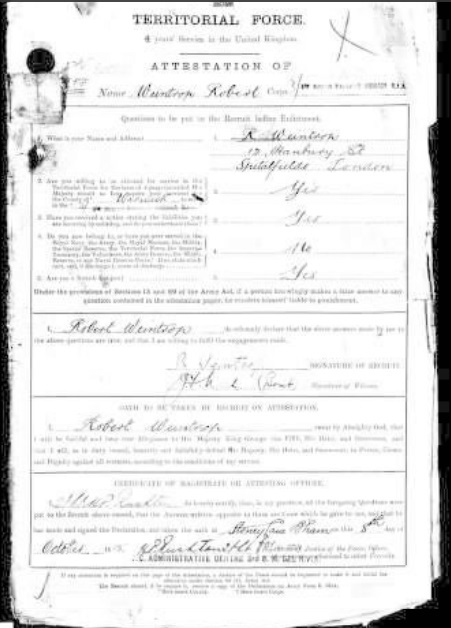
In the First World War he returned to Bitain and joined the Royal Artillery - it was from his detested sergeant-major that he took the pseudonym Bud Flanagan.
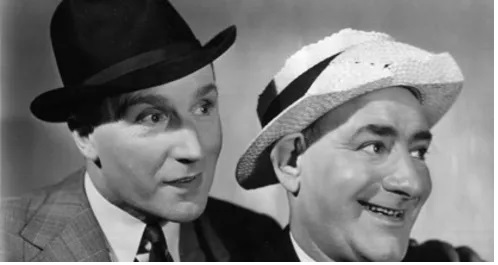
After the war came the famous Flanagan and Allen partnership ("Underneath the Arches") aand in 1930 the Crazy Gang, which Bud led right up till its final performance in 1962. He was appointed OBE in the 1959 Birthday Honours and appeared in 21 Royal Command Performances.
Bud Flanagan never forgot his origins among his own people. Besides the Brady Club he gave active help to several Jewish charities, including the Jewish National Fund, the Jewish Home and Hospital at Tottenham, and the Manchester School for Handicapped Children. He served as president of the sportsmen's committee of the J.P.A. and was King Rat of the theatrical charity,the Grand Order of Water Rats, three times. An avenue of trees in the Queen Elizabeth Forest in Israel bears his name.
After the Crazy Gang broke up Bud continued to appear in pantomime, for he could not bear to retire. In more recent years he was a partner with Mr Jack Solomons in a bookmaking business and was connected with a threatrical agency.
He is survived by his widow. Their only son died in America in 1956 at the age of 30.
https://www.londonshoes.blog/2019/05/21/the-legendary-bud-flanagan-from-cradle-to-grave-an-east-end-boy-done-good/
The Legendry Bud Flanagan. From the Cradle to the Grave (an East End Boy done good)
‘Chaim Reuben Weintrop’ (aka Bud Flanagan) was born in October 1896 at no.12 Hanbury Street in the Spitalfields district of Whitechapel, deep in the heart of London’s east-end.
His parents Wolf & Yetta Weintrop fled to England following the persecution of Jews in their native Poland.
They had paid good money to escape to New York in the USA – however, they had been duped by a ‘moody’ ticket, and as a result they ended up in the east-end of London, a regular haven for Jewish and other immigrants fleeing persecution in Europe.
The Weintrop’s settled at no.12 Hanbury Street in impoverished and run down Spitalfields, where they raised 10 children-5 boys and 5 girls.
Flanagan’s father Wolf, ran his own fish & chip shop business from 12 Hanbury Street, and later on he owned a barbers and a sweetshop in the same area.
In his 1961 biography ‘My Crazy Life’, Bud Flanagan doesn’t look back at his childhood in the Spitalfields/Whitechapel districts, with rose-tinted glasses – he tells it like it was, a place where only the strong survived and the weak went to the wall.
He describes the atmosphere living amongst the streets of run down housing – the doss houses, the pubs, the market stalls, the Salvation Army hostels, the Truman Brewery, the tobacco factories, the umbrella shops – and the destitute, the prostitutes and the drunks on street corners and in alleys throughout streets such as Brick Lane-Wheeler Street–Club Row & Commercial Street.
Flanagan recalls that even in the family fish & chip shop in Hanbury Street, the salt pots had to be chained to the counter and tables, otherwise they would’ve been nicked.
Next door to the family’s Hanbury Street home/shop, was a blacksmith who used to re-shoe the many horses that were used by the districts local industries, particularly the breweries – and Bud Flanagan recalled that the sound of the blacksmith banging away at the anvil, was a constant daily noise from 7am to 7pm.
One of the popular escapes from the drudgery of life for the common working man was the Theatre – and fortunately London in those times, was full of Theatres.
Just around the corner from the family’s Hanbury Street home, in Commercial Street, was the famous ‘Cambridge Music Theatre’, where ‘variety’ acts and music hall acts would regularly perform.
As a youngster, Bud Flanagan was a bit of a hustler, and at the age of 10 he got a job as a ‘runner’ or ‘call-boy’ as they used to be known as, for the old actors and performers working the Cambridge Music Theatre – where he would quite simply run errands for the performers, such as getting them cigarettes, or booze or food, mainly anything they may have wanted, between their performances.
For his reward, Flanagan received tips from the artists for carry out their errands – and very soon had saved up enough money to be able to trot off to the famous ‘Gamages’ store in Holborn, to purchase conjuring props and equipment – as he had always wanted to be a conjurer, and regularly performed magic tricks to his friends in the neighbourhood.
At the age of 12 Bud Flanagan made his stage debut in a talent show at the nearby ‘London Music Hall’ in Shoreditch, where he was billed as “Fargo-the boy Wizard”. He didn’t win the contest, but the experience put him firmly on the road to being a full-time music variety entertainer.
One strong memory that Flanagan had from his early years was hanging around the many ‘arches’ within the Spitalfields streets that were created where bridges were built over the streets to carry the railway tracks into nearby Liverpool Street Station.
One particular ‘arch’ was situated in a side street just down the road from the Cambridge Music Theatre in Commercial Street.
Flanagan observed that when the big American acts started to come to Britain and fill the theatres – there would be loads of British performers congregating under these ‘arches’ practicing the material and styles of delivery, that the Americans were performing, in an effort to improve their own acts, which might perhaps move them a little further up the Bill.
In 1910 aged just 14, a hungry for success and adventure Bud Flanagan, stowed away on a ship bound for New York – the destination that his parents had originally wanted to flee Poland for.
Throughout his time in New York, Flanagan managed to get work with various vaudeville acts – and ended up touring the USA, and apparently even further afield, sailing off to countries such as New Zealand Australia.
However, in 1915 Bud Flanagan sailed back to Britain to enlist in the Royal Field Artillery and fight for his country in WW1.
Two important things happened whilst Flanagan was fighting at the ‘front’, that would be pivotal in Bud’s forthcoming career.
Firstly, while fighting in Flanders, he made friends with another young soldier who had aspirations of being a professional entertainer – his name was Chesney Allen.
Secondly, whilst serving in the Royal Field Artillery, Bud Flanagan was under the charge of a Sgt Major ‘Flanagan’ – who made Bud’s life a total misery by bullying and persecuting him for being a Jew.
Bud Flanagan swore to himself that one day he would get revenge by belittling and making a mockery of the Sgt Major’s surname in some way or another – hence the change of name from Chaim Reuben Weintrop to ‘Bud Flanagan’.
Having returned from WW1, Bud Flanagan teamed up with his old ‘front-line’ colleague Chesney Allen, and they decided to create their own act based on song and comedy – calling themselves “Flanagan & Allen”.
Flanagan & Allen had a unique kind of singing style and delivery, where Bud Flanagan would be the principal singer, banging out the melody – whilst Chesney Allen accompanied him by basically ‘talking’ the lyrics – a style that made them extremely popular with the general public.
As well as just singing, the Flanagan & Allen duo also teamed up with a few other popular comedy performers of the day, to form the ‘Crazy Gang’, an act that performed sort of archaic comedy routines – and very popular with the public.
The ‘Crazy Gang’ as a collective, and ‘Flanagan & Allen’ as a singing duo, were the sort of acts that were everyone’s favourites – and they were soon signed up by the leading promotor/manager of the day, Val Parnell – an arrangement that got them working all the top theatres in London and throughout Britain – and ‘regulars’ on the Royal Variety Shows at the London Palladium, where it is said that the Crazy Gang and Flanagan & Allen were a particular favourite of the old Queen Mum.
During WW2 Flanagan & Allen churned out many hit records with songs that became extremely popular with the general public, as their lyrics often touched upon the simple pleasures of home life and the importance of companionship and love and happy memories – with songs like:-
*Underneath the Arches
*Run Rabbit Run
*Maybe it’s because I’m a Londoner
*Strollin’
*Round the back of the Arches
*Home Town
*The Umbrella Song
*Down Forget-Me-Not Lane
Plus many more, including the favourite wartime parody ‘We’re going to hang out the washing on the Siegfried Line’
All of these songs brought joy and happiness and encouragement to the ordinary people, and their loved ones fighting overseas – during the dark days of WW2.
Flanagan & Allen were one of the top acts around throughout the 1930’s & 1940’s – with their distinctive sound and appearance, with Chesney Allen in a ‘sharp’ suit and stylish hat – and Bud Flanagan often in an oversized fur coat and battered boater hat.
However, in 1945, Chesney Allen had to retire from performing for health reasons – which sadly saw the Flanagan & Allen partnership dissolve.
Bud Flanagan continued to perform as a solo act, and collectively with the Crazy Gang.
In 1956 Bud Flanagan and his loyal wife Ann ‘Curly’ Quinn, suffered tragedy when their only son ‘Buddy’ died of Leukaemia aged just 30.
By the mid to late 1950 and into the 1960’s, an aging Bud Flanagan’s showbiz career started to decline – and so he ploughed his money into buying a chain of betting shops, as he was passionate about horse racing and having a little ‘flutter’.
In 1959, Flanagan was awarded the OBE for his services to the entertainment business.
He was also made the ‘King Rat’ of the prestigious historic showbiz charity ‘The Grand Order of Water Rats’.
However, in 1968 – at the age of 72, Bud Flanagan became involved in a particular piece of work that would make his voice to become familiar with literally millions of people (and still does) – without the general public probably not being aware of him or knowing anything about him.
In 1968 legendary comedy writers Jimmy Perry & David Croft created a new TV comedy series entitled “Dad’s Army” – a sort of sit-com about a Home Guard company, operating during WW2.
However, the TV series needed a distinctive and catchy signature tune to catch the public’s imagination.
Jimmy Perry had already written the lyrics to a song he called “Who Do You Think You Are Kidding Mr. Hitler” – and approached one of his childhood singing idols ‘Bud Flanagan’ who he wanted to sing the programmes signature tune.
It is widely assumed that “Who Do You Think You Are Kidding Mr. Hitler” is an old song written during WW2 – but it is not – it was written in 1968, and it is Bud Flanagan’s interpretation and delivery of the song that gives the impression that it is a much older tune.
The song was recorded at London’s Riverside Studios during early 1968 – and sadly it was the very last piece of recorded material that Flanagan made – as sadly in October 1968, Bud Flanagan died of a heart attack at the age of 72.
He was so popular, it is said that over 100,000 people lined the streets of his funeral parade to the Golders Green Crematorium a well-known Jewish crematorium in north west London.
Following his death, an instruction in the administration of Flanagan’s estate was for the executors to set-up the “Bud Flanagan Leukaemia Fund” for the purposes of research into the disease that had taken the life of his only child ‘Buddy’.