

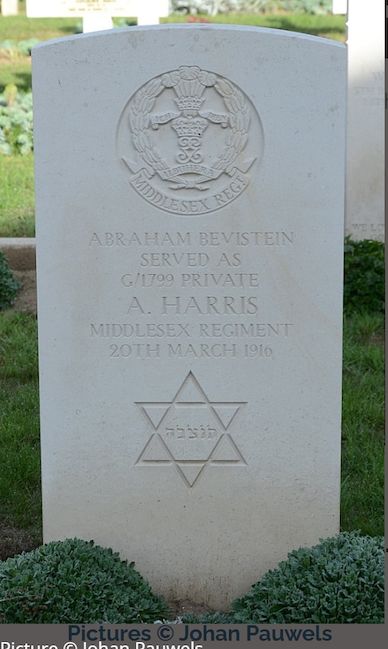
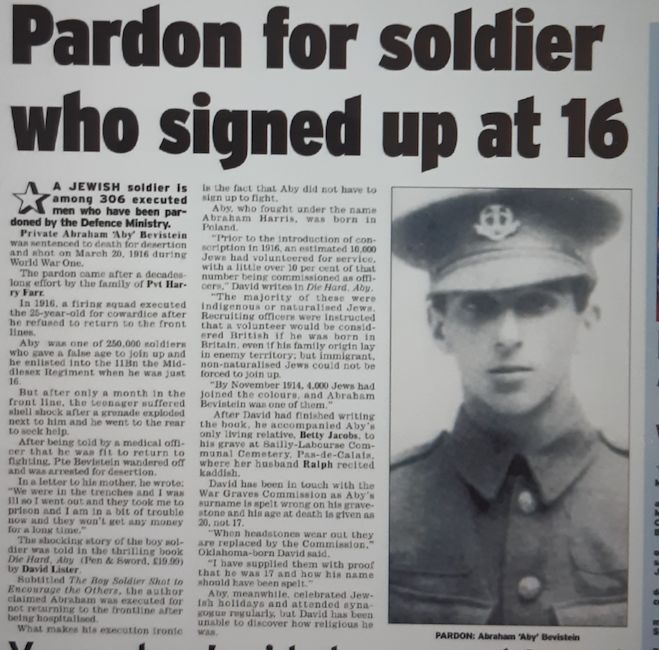
Aby Bevistein was born in Russian-occupied Poland in 1898 and came to London when he was three. In September 1914 Aby volunteered, changing his surname to the English "Harris".
His parents were heartbroken when he joined the army
Soon after his arrival in France Aby discovered the wretched nature of trench warfare. He wrote home:
"Dear mother, I've been in the trenches four times and come out safe. We're down the trenches for six days and then we get relieved for six days' rest. Dear mother, I do not like the trenches. We're going in again this week."
For Aby, and many like him, the trenches meant cold and mud, wet clothes and rats, the smell of death and the sight of mutilated flesh, long monotonous hours interrupted by terror.
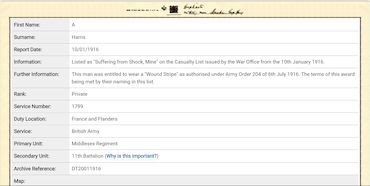
On 29 December 1915 Aby was caught in a German mine explosion - the enemy had tunnelled under the trench where he was stationed. He was wounded and suffered what was then simply called "shock". In today's military lexicon it would be described as "combat stress" or "post traumatic stress disorder".
By early spring Aby was back on the front. On 12 Feb 1916 the Germans again attacked his position, this time with grenades.
Dear mother, I'm in the trenches and I was ill so I went out, and they took me to the prison and I'm in a bit of trouble nowAby Bevistein
Suffering from shock, Aby wandered back and forth along the British lines. He was eventually arrested and charged with desertion. His last letter home is that of a boy who seems determined to underplay his situation, not to put stress on his mother at home.
"Dear mother, I'm in the trenches and I was ill so I went out, and they took me to the prison and I'm in a bit of trouble now."
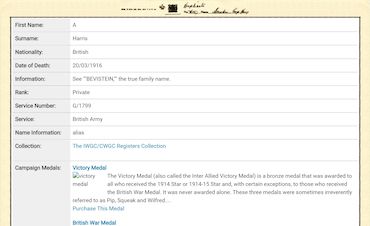
The following month Aby then aged 17, became one of the 306 British soldiers executed during the Great War


Give us your feedback
Please tell us what you think to help us develop and progress this vital resource